Quality fleet graphics since 2001
Quality fleet graphics since 2001
Step vans. Sprinter and Transit conversions. Food trailers. Ice cream carts, coffee trucks, dessert trucks. We wrap the trucks behind the city’s most photographed mobile food brands — designed for the service window in front of you, the festival a mile away, and the Instagram feed of every customer who walks up. 3–6 days per truck. Health-code permits and license numbers placed correctly the first time.
Food Cart live or die on the visual. The first impression at a corporate park, a festival, a street corner, or a curbside lunch stop is the wrap — and the second impression is the photograph that customer takes and posts before they’ve taken a bite. That makes food cart wraps fundamentally different from any other commercial vehicle wrap. A van wrap is direct-response B2B marketing. A food cart wrap is consumer brand identity, menu signage, social-media content, and health-department compliance — bundled onto one canvas that has to survive grease, weather, and a 250-day vending year.
We’ve wrapped step vans for chef-driven barbecue brands, Mercedes Sprinter conversions for high-end coffee operators, food trailers for festival vendors, ice cream trucks for route-based summer operators, and full multi-truck rollouts for growing brands expanding into NJ and NYC. Each vehicle type brings its own design problem — where the service window sits, how the menu reads from the customer line, where the health permit and license number have to be visible, how the wrap photographs against a city skyline at 5 PM.
Every food cart wrap is designed by our in-house team, printed on 3M IJ180Cv3 or Avery MPI 1105 cast vinyl with food-environment-rated UV laminate, and installed at our climate-controlled Linden, NJ facility. We turn around grand-opening trucks in as little as 10 days when the launch date is locked, and we batch print across multi-truck programs so unit 1 and unit 8 of a growing brand still color-match.
From the first call to the launch-day photograph, here’s how a typical food cart wrap moves through the shop.
Consultation
Design
Print & Laminate
Install & Launch
A food cart wrap is a custom vinyl graphic wrap applied to a food cart’s exterior. Food cart wrap can include various designs, logos, and graphics to promote the food cart’s brand or menu items. A food cart wrap is a great way to make your food cart stand out from the competition and attract potential customers.
Wrapping trucks and carts involves covering them with a special vinyl film which is applied to the surface of the truck or cart. Vinyl film is designed to protect the surface of the truck or cart while also providing a unique and eye-catching look. Wrapping a truck or cart can be used to advertise a business, promote a product or service, or simply to make the vehicle look more attractive.
Our process of wrapping involves carefully cutting and applying the vinyl film to the surface of the vehicle, then heating it to ensure a proper bond. Wrapping can be a great way to customize and protect your truck or cart.
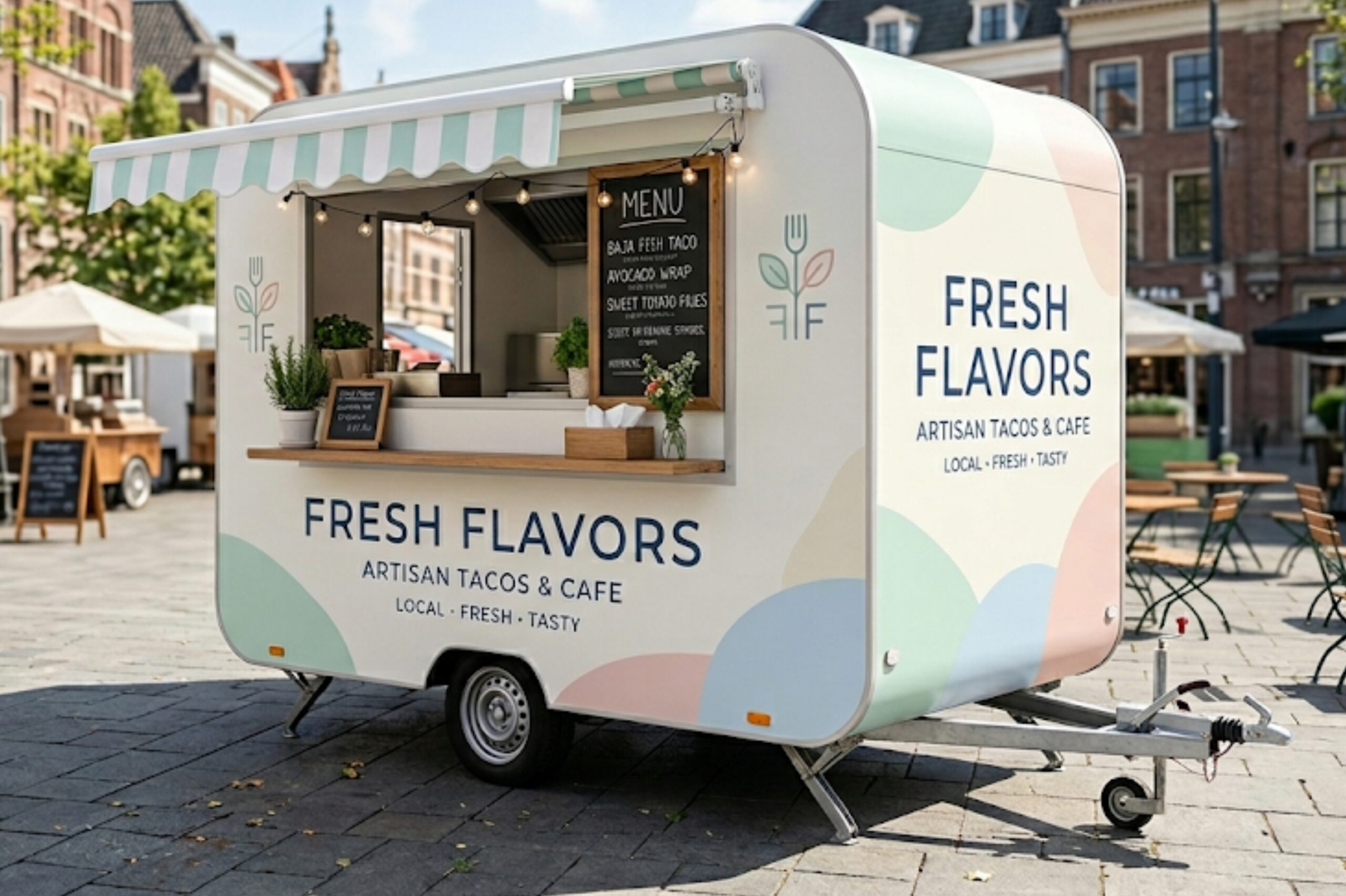
Service Tiers
$5000
starting price
For new food cart brands launching their first unit, restaurants expanding into mobile, or established operators rebranding from the ground up. Brand Launch is the premium workflow — full custom design with multiple rounds, brand pattern library development, menu integration, and a photo-set deliverable for the operator’s launch marketing.
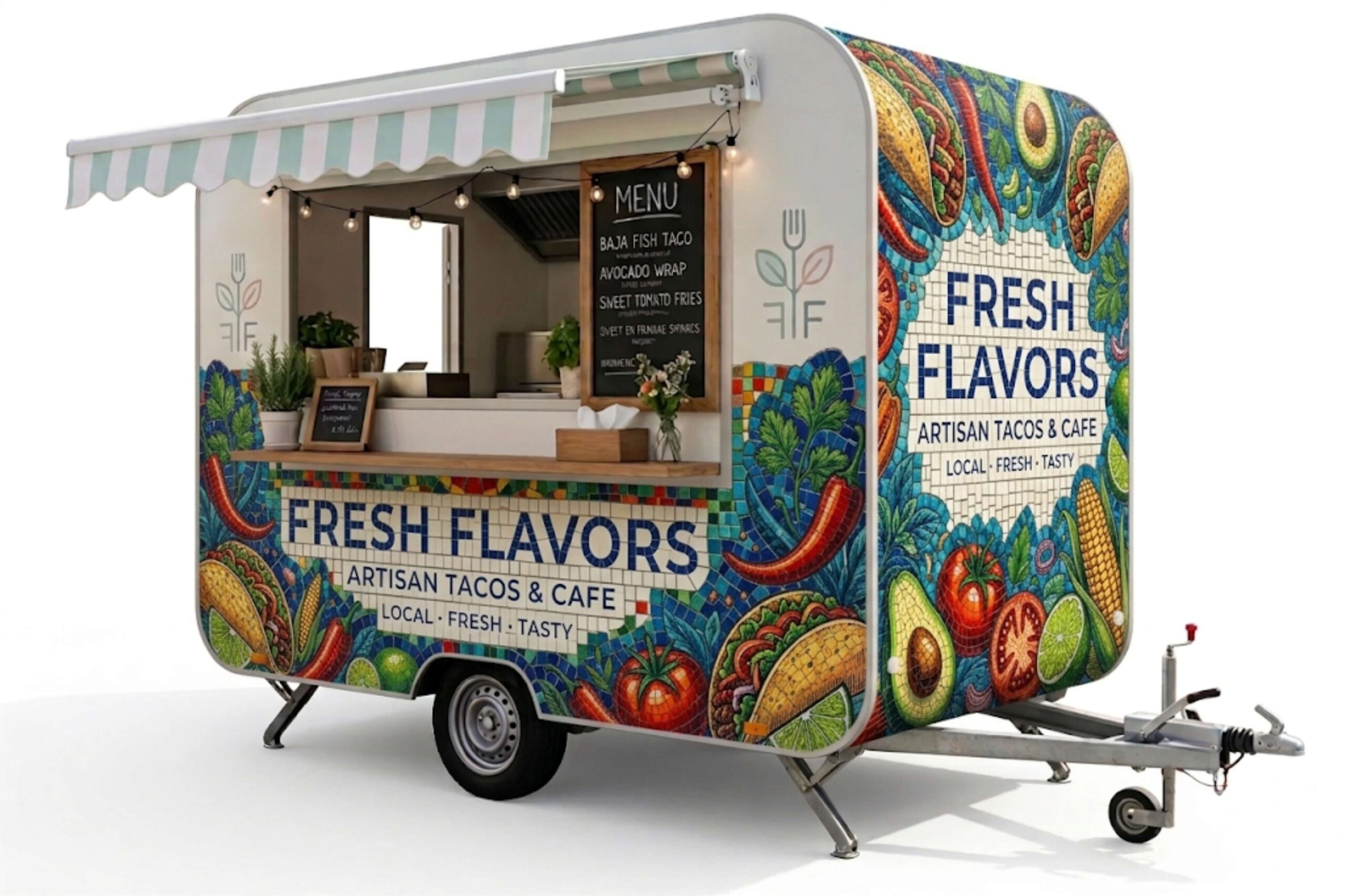
$3500
starting price
For existing food carts that have a solid brand identity and need it executed cleanly on the cart. Standard Wrap delivers the full visual impact and material quality of Brand Launch at a tighter scope — fewer custom illustrations, two revision rounds, and a faster turnaround. The default tier for most operators.
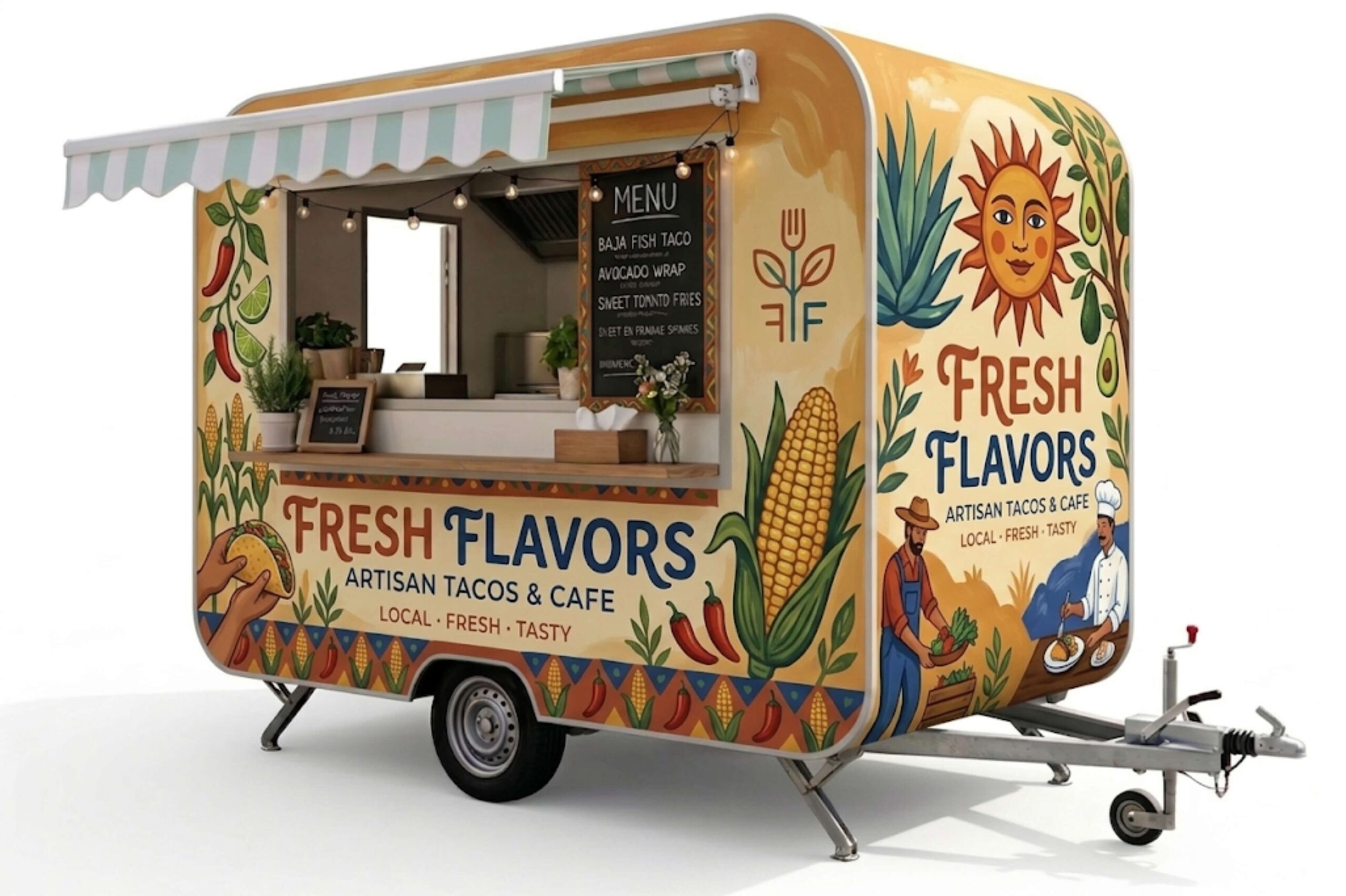
$2500
starting price
For operators on their second or third wrap – same brand, updated design, or simply a refresh after years of road wear. We remove the existing wrap (or leave it under, if it’s been recently installed), prep the surface, and apply the new design. Tightest turnaround in the shop.
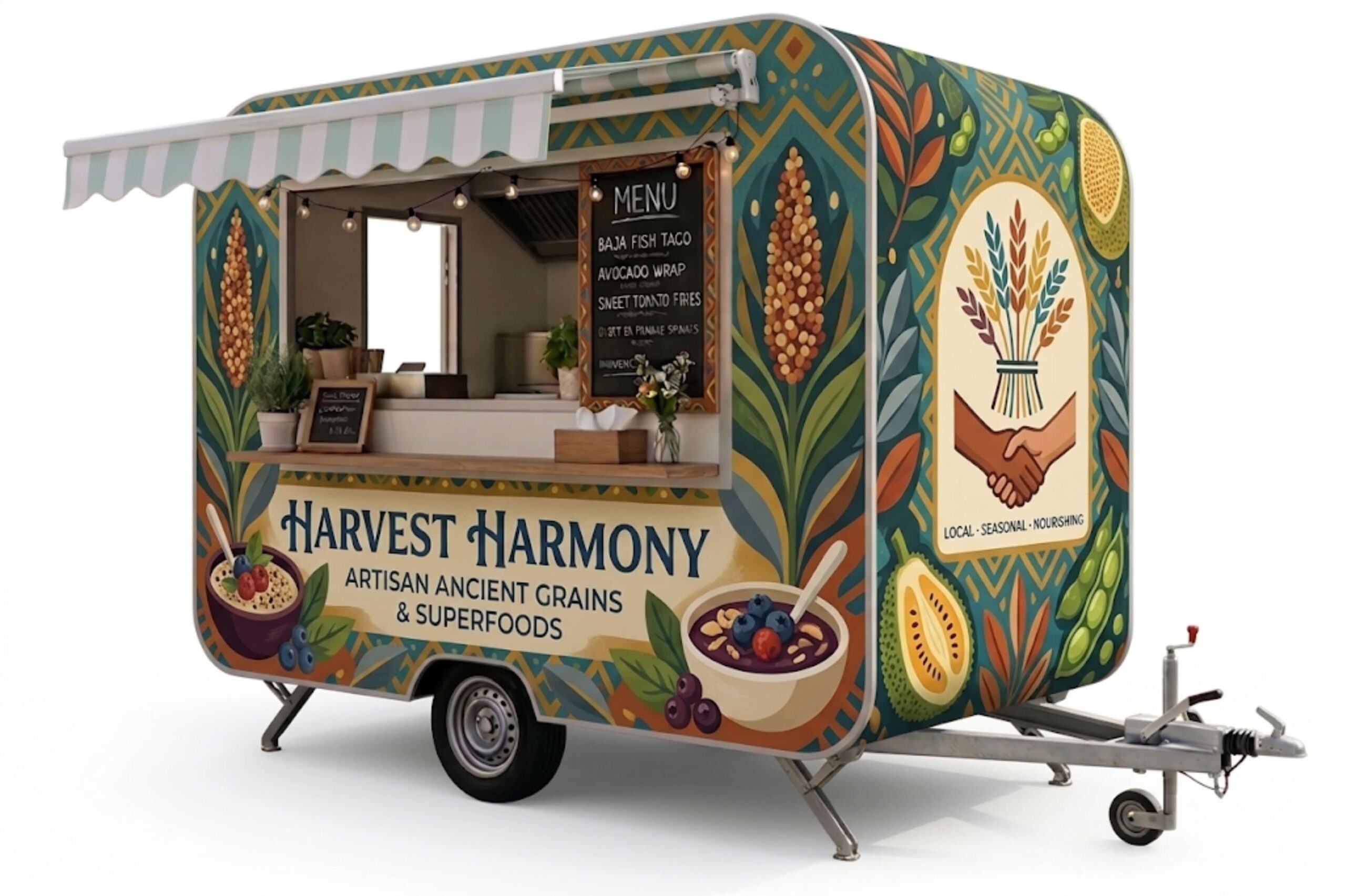
Food Cart We Wrap
Different mobile food formats need different wrap thinking. Here’s how we approach each common vehicle type.
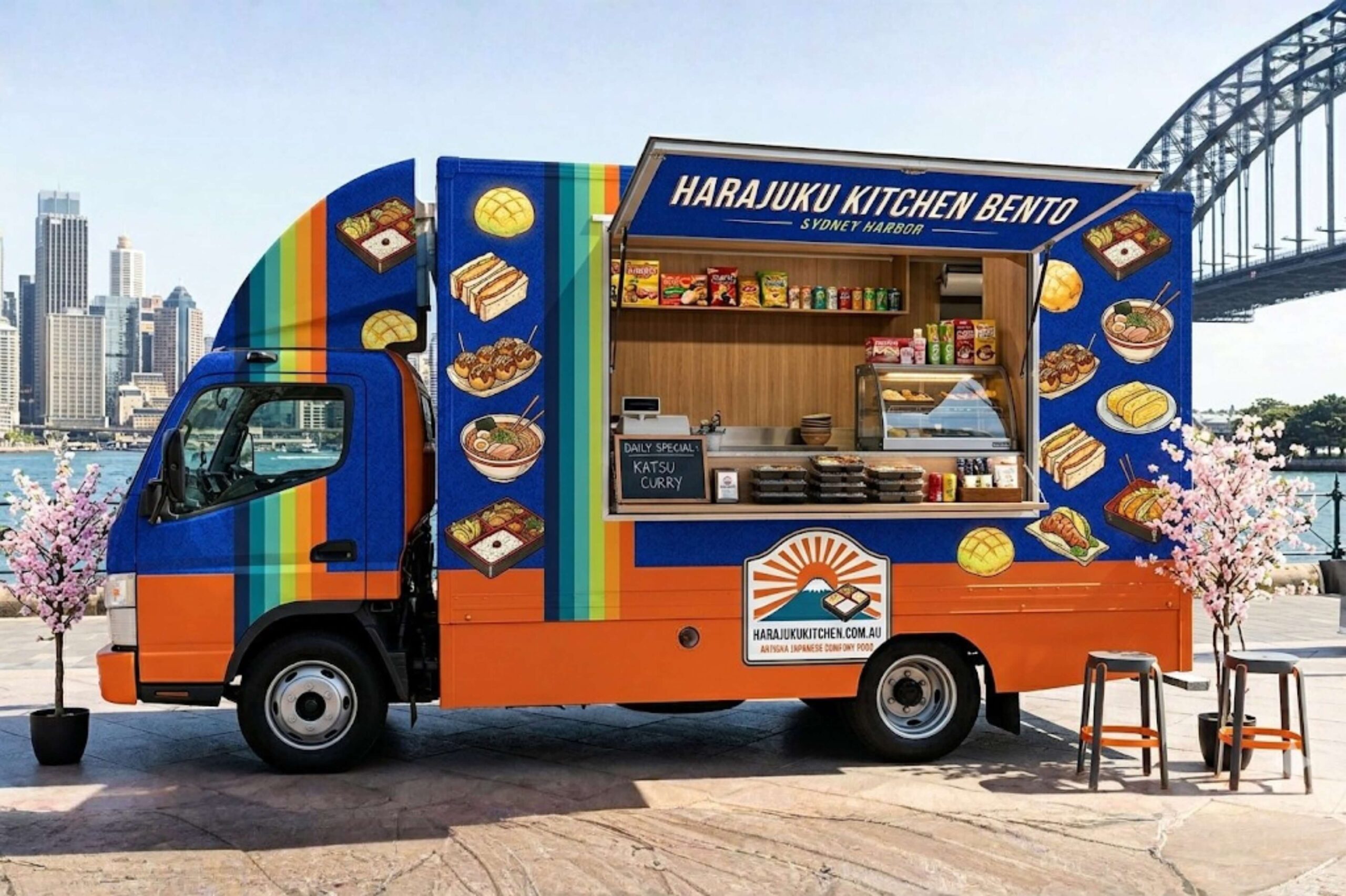
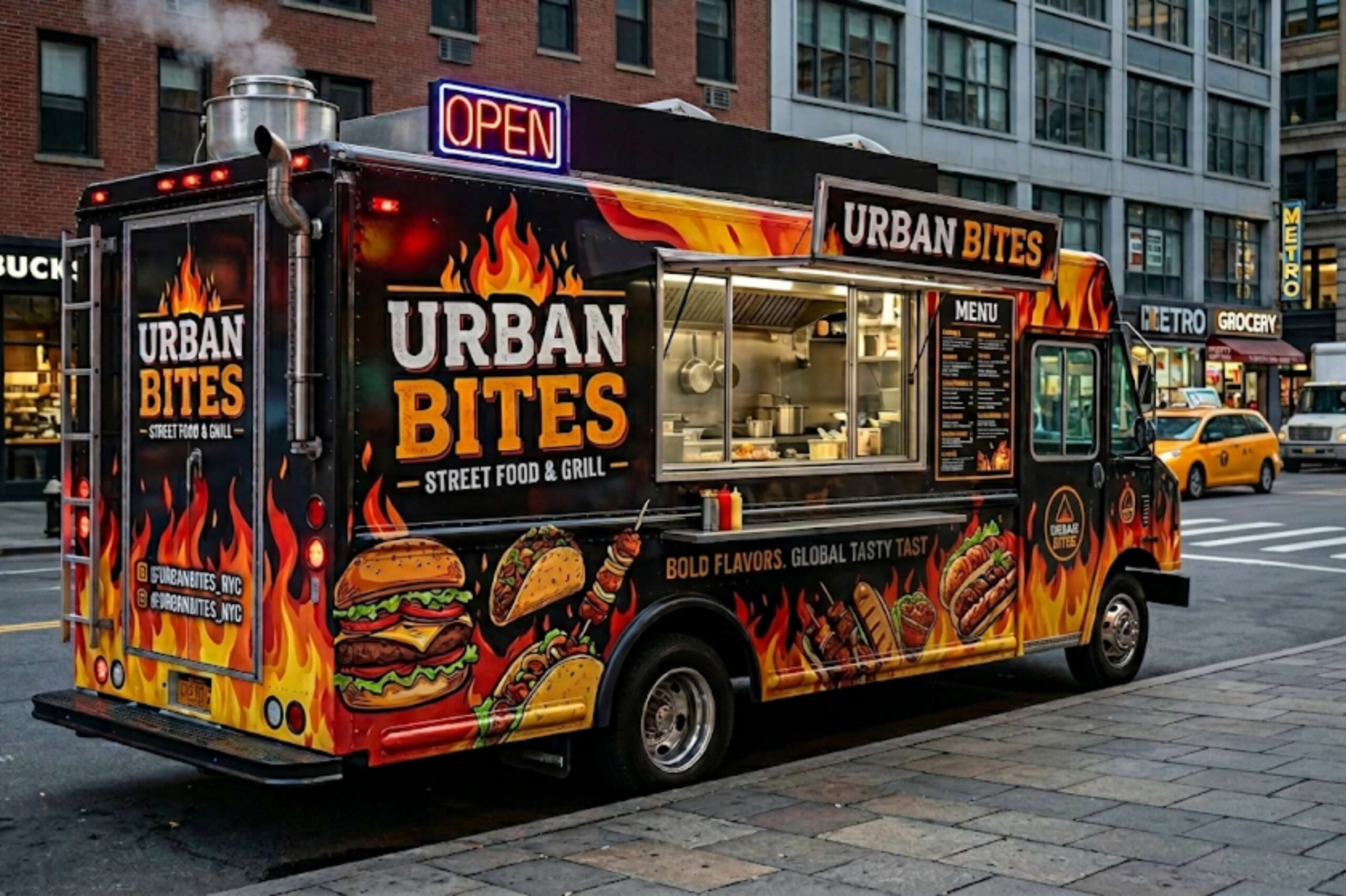
Classic walk-in step vans — Morgan Olson, Utilimaster, Workhorse, and Chevy P30 chassis with custom-built food bodies. The step van is still the most popular food carts format because the flat side walls give designers the largest, most uniform canvas in mobile food, and the high roofline frames the brand at eye level for customers in line. We wrap the body, the service window frame, the rear doors, and any roof-mounted vent stacks where the design permits.
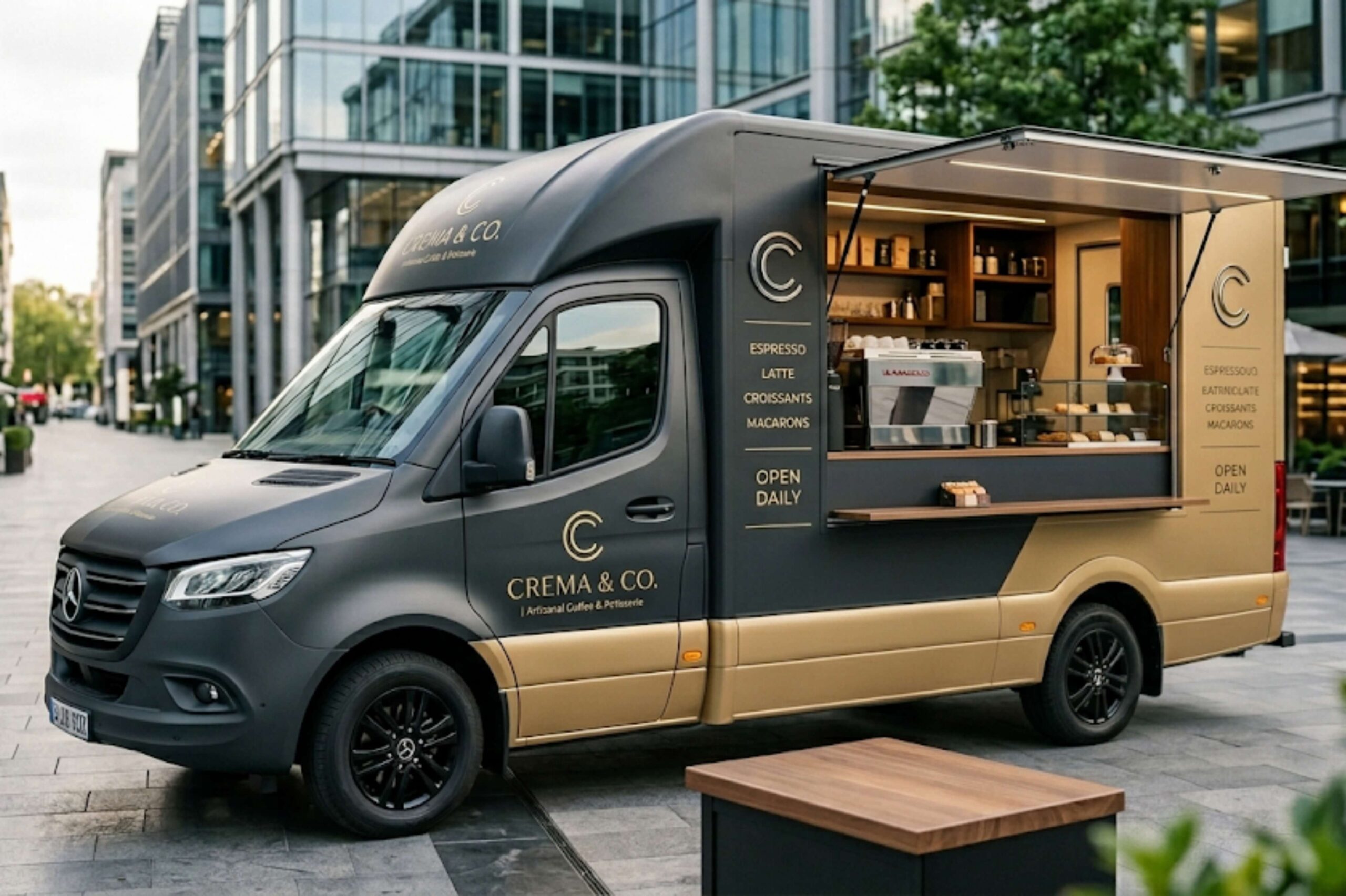
Mercedes Sprinter, Ford Transit, and Ram ProMaster passenger and cargo vans converted into food carts by builders like M Design Vehicles, Cruising Kitchens, and Prestige Food Carts. The Sprinter format dominates the high-end coffee, dessert, and chef-driven concepts because the silhouette photographs well and the wrap surface is smooth and uniform. We have install templates for every common conversion layout.
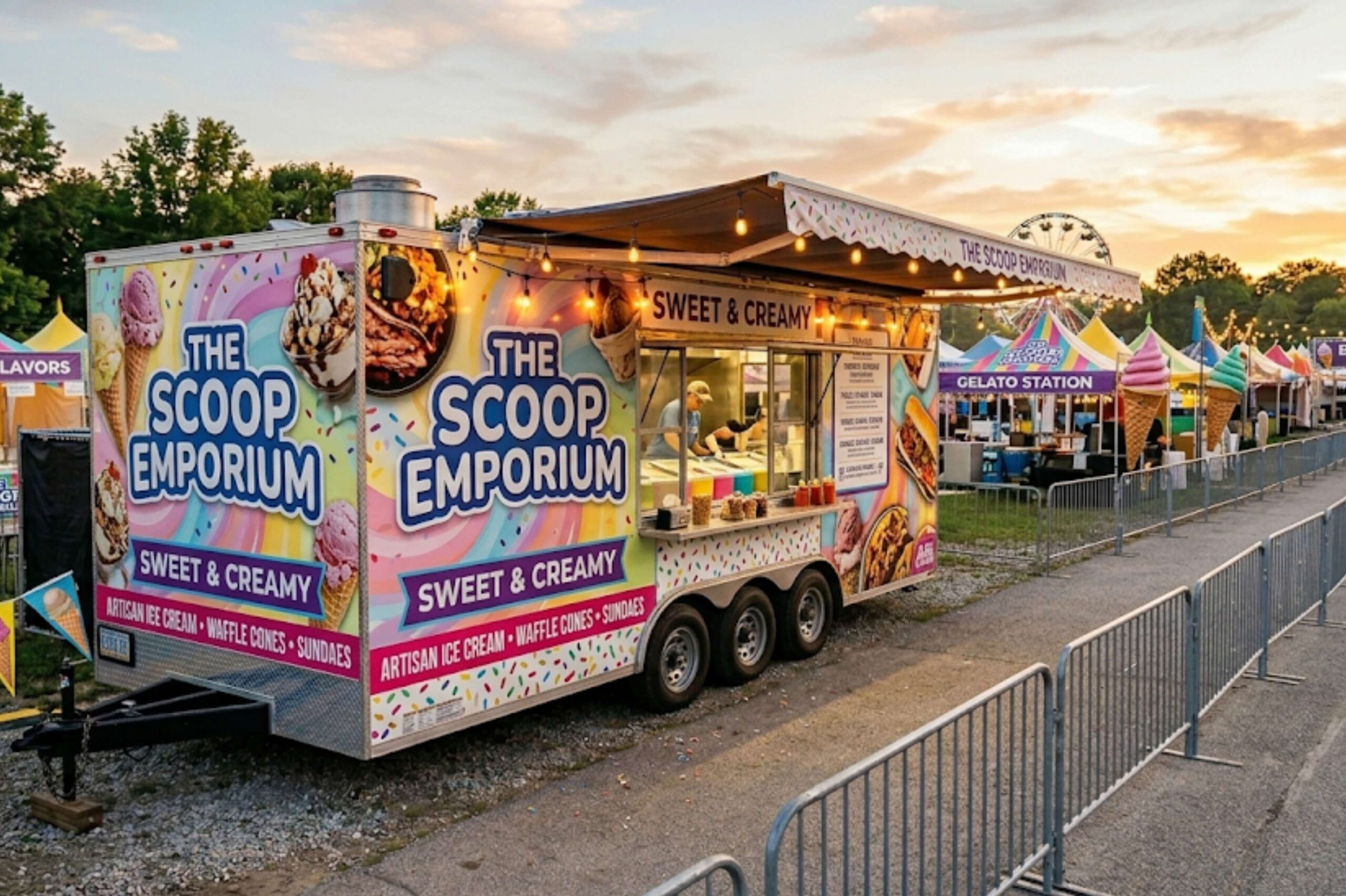
Pull-behind food trailers ranging from 8ft single-axle units to 28ft tandem-axle festival trailers. Food trailers are the most affordable entry point into mobile food and they're the format we see most for festival vendors, corporate-event caterers, and chef pop-ups. The wrap has to read clearly from a distance at a festival and survive being towed at highway speeds between events. Lower per-unit cost than a powered food truck.
Route-based ice cream trucks (Mister Softee, Good Humor-style operators) and chef-driven dessert trucks (Van Leeuwen, Big Gay Ice Cream, Cinnaholic). Ice cream truck wraps need to read instantly from a neighborhood street at residential speed and have to integrate with the audio system and product display window. Dessert trucks tend to be more photo-driven — the wrap is the marketing because the customer is choosing the truck off Instagram before they ever see it in person.
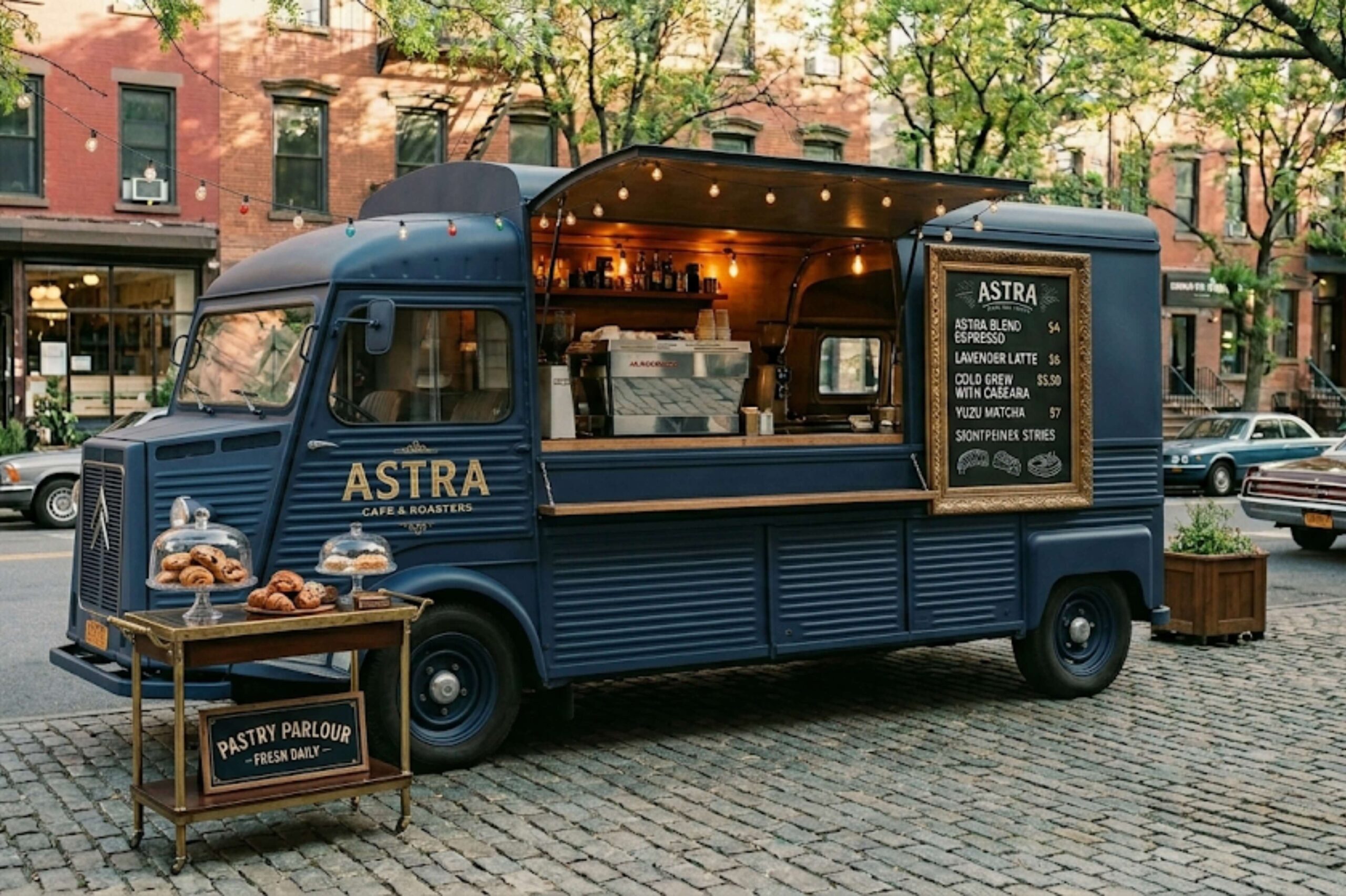
Coffee trucks and mobile beverage operators — Sprinter conversions, ProMaster builds, and converted Airstreams. Coffee trucks live at corporate parks, weddings, and event activations where customers stand at the truck for 60+ seconds during the order — making the menu wall on the wrap the longest-read surface in mobile food. We integrate the menu directly into the wrap design when the operator wants it baked in, or leave the side wall clean for changeable menu boards.
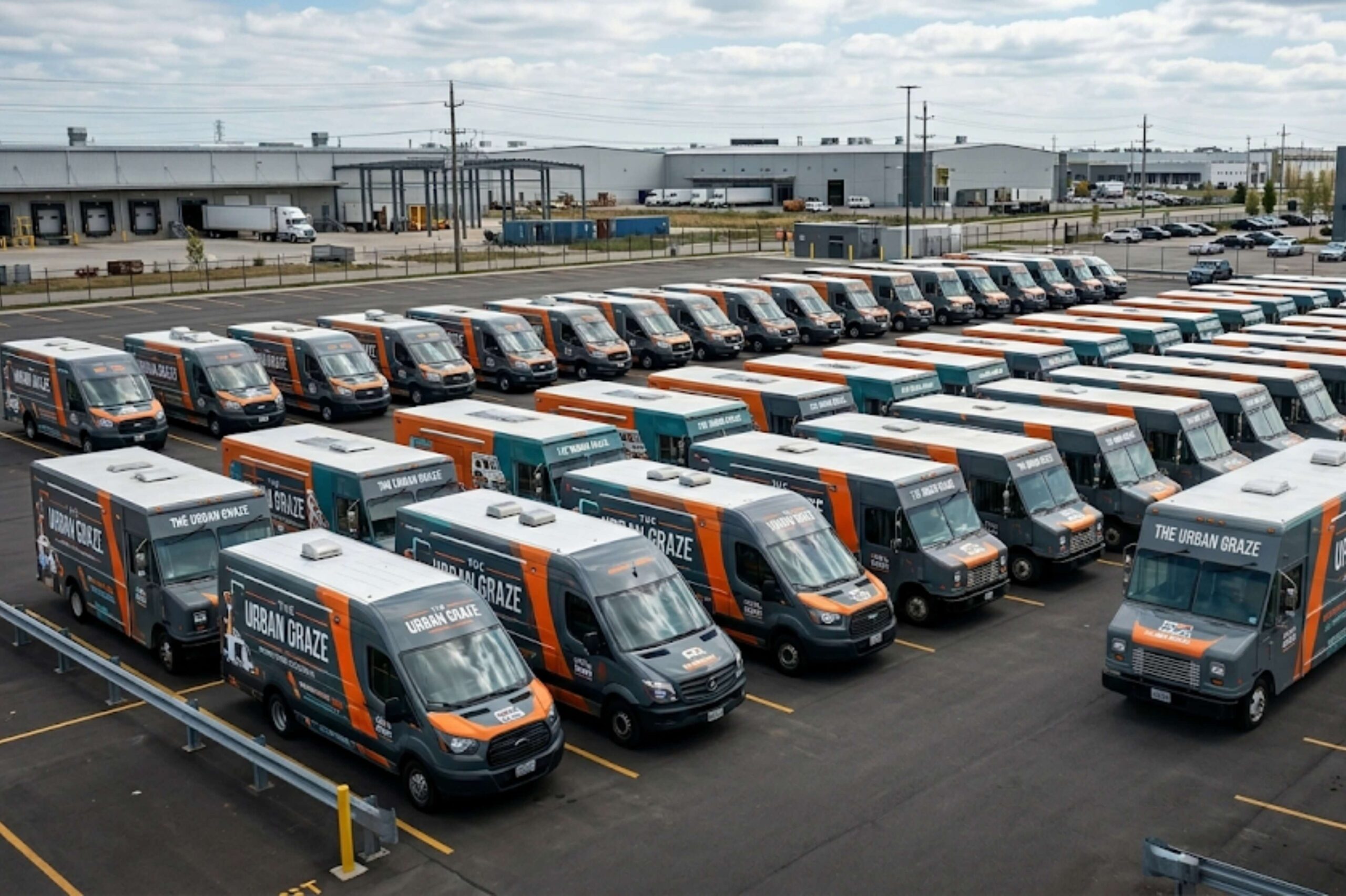
Growing food brands running 3, 5, 10, or 20+ trucks — Cousins Maine Lobster, Halal Guys, Van Leeuwen, Korilla, and the next generation of regional and national mobile food brands. Multi-truck brand consistency is the central problem: unit 1 in 2018 has to match unit 12 in 2026, across two different chassis types and three different design generations. We solve it with locked brand templates, batched production runs, and per-truck QC photo sets.
We've wrapped food carts since the format existed in its modern form. We know the chassis (step van, Sprinter, ProMaster), the conversion builders (Cruising Kitchens, M Design, Prestige), and the surface quirks (vent stacks, service windows, propane covers) cold.
Most vehicle wraps are designed for moving traffic. Food cart wraps are designed for the photograph — high contrast, clean compositional hero, brand mark positioned where it survives the customer's framing. Our design team treats the wrap as content, not just signage.
If you're launching truck 5 of a brand, units 1 through 4 need to match. We batch print runs, lock brand templates, and run per-truck QC photo sets so a regional or national brand's fleet reads as one identity across every market.
NYC DOHMH MFV permit, NJ Department of Health food establishment license, PA Department of Agriculture mobile food vendor — every jurisdiction has visibility rules. We place the required identifiers correctly the first time so the truck doesn't fail inspection on launch day.
When the launch date is locked, we work backward from the date. 10-day turnaround on a Standard Wrap is achievable when artwork is ready and the truck is on the schedule. We've launched trucks in time for festival weekend openings, restaurant-week kickoffs, and corporate-park residency starts.
Design, large-format print, lamination, and install all happen at our 10,000 sq ft Linden, NJ facility. No outsourced printing, no shipped panels. The same team that drew the wrap is the one that lays it on the truck.
From initial consultation to final installation, our food cart wrap process is designed to deliver exceptional results. We handle design, printing, and installation under one roof, ensuring every wrap is built for maximum impact, long-term durability, and consistent brand exposure wherever your food cart travels.


Searching for professionals in your vicinity? Pixel Wraps brings top-notch food cart wrapping services right to your neighborhood. We create custom vinyl wraps designed to ensure that your food cart or food cart wraps look both professional and tempting.
Tell us about your cart and we’ll send back a quote within one business day — most carts wrap in 3–5 days from approved design.
Tour our 10,000 sq ft Linden facility — see work in production.
What are food cart wraps made of?
Our food cart wraps are primarily made from high-quality 3M vinyl. 3M is a leading brand in the industry, known for its durability, vibrant color representation, and ease of maintenance.
Can I choose a custom design for my wrap?
Absolutely! We pride ourselves on offering bespoke designs tailored to your brand and preferences. You can work with our design team to bring your vision to life.
How long does a 3M food cart wrap last?
With proper care, our 3M vinyl wraps can last anywhere from 5 to 7 years. The wrap's lifespan can be influenced by factors like weather conditions, exposure to sunlight, and cleaning frequency.
What happens if the wrap gets damaged?
Minor damages can often be patched seamlessly. For more extensive damage, it might be necessary to replace a section of the wrap. We're here to assist and ensure your truck looks its best at all times.
Are food cart wraps different from food truck wraps?
The materials used for both are generally the same. The primary difference is the size and design customization to fit the specific dimensions and structure of either a food cart or a truck.
How do I maintain and clean my wrapped food truck?
Regularly clean your wrapped truck with mild detergent and water. Avoid using harsh chemicals or high-pressure washes, as they can damage the vinyl.
How much does it cost to wrap a food truck?
The cost varies based on the size of the truck, the complexity of the design, and any additional customization. Contact us directly for a tailored quote.
Can the wrap be removed?
Yes, our wraps can be safely removed without damaging the truck's paint. In fact, the wrap often preserves and protects the original paint underneath.
