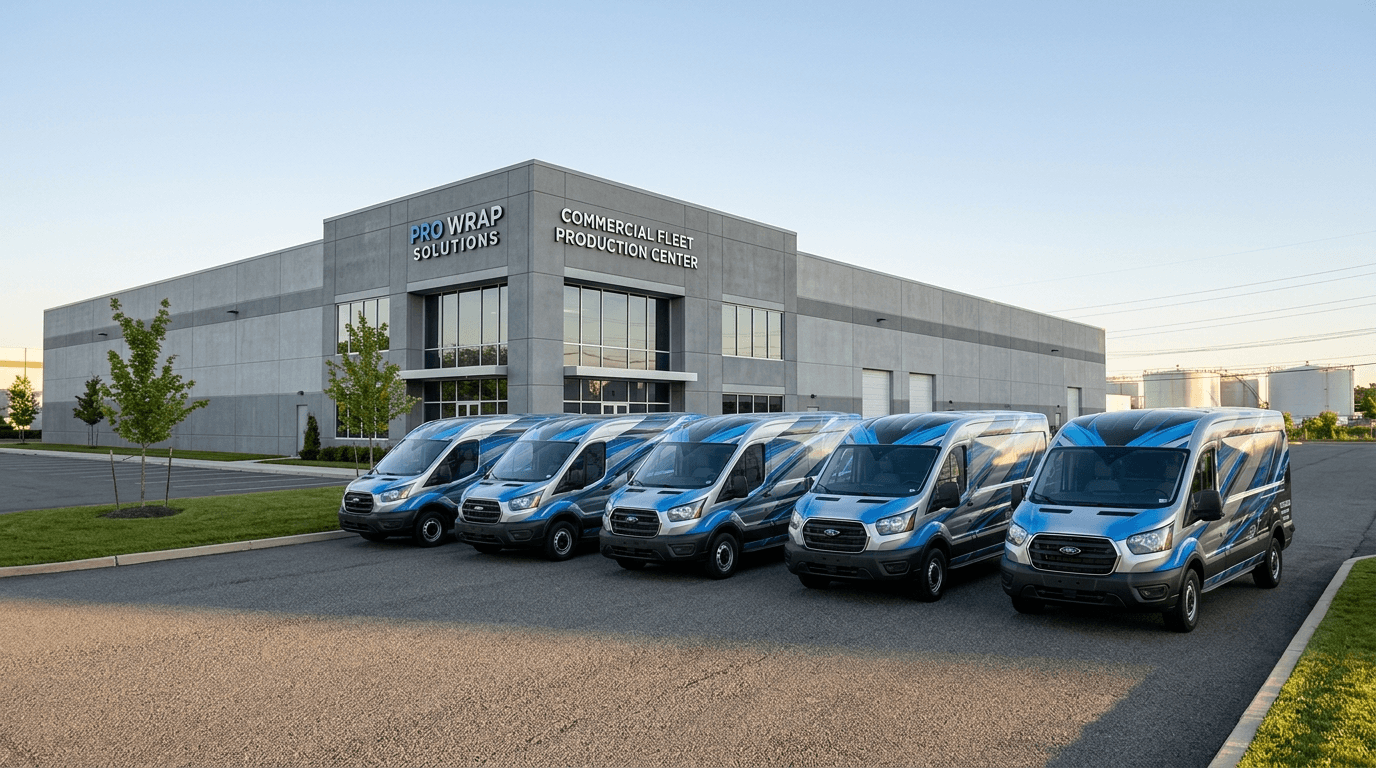
A business does not need to wrap every vehicle at once to begin building a branded fleet. Starting with a smaller group can make it easier to test the design, confirm production standards, understand vehicle downtime, and measure how the graphics perform in daily use.
The right first batch is not always a fixed percentage of the fleet. A company with five nearly identical vans faces a different decision than a business operating 40 trucks, pickups, trailers, and passenger vehicles from several locations.
The first group should be large enough to establish a visible presence but controlled enough to identify and correct issues before the remaining graphics enter production. At Pixel Wraps, we help businesses select an initial batch based on vehicle type, condition, visibility, availability, and expected service life.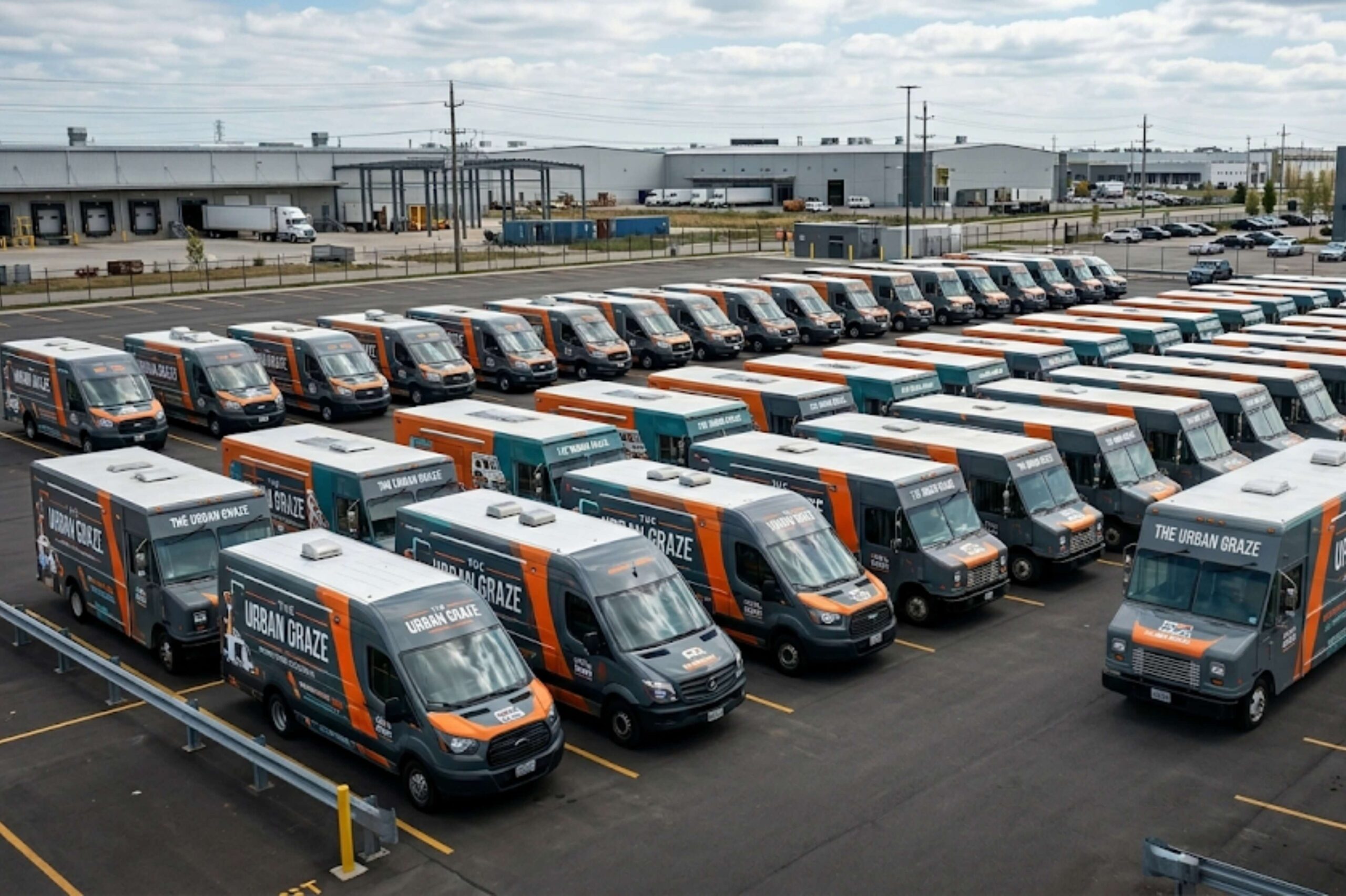
There Is No Universal First-Batch Number
Advice such as “wrap 25% of the fleet first” sounds useful, but it ignores how commercial fleets operate.
The appropriate number depends on:
- Total fleet size
- Number of vehicle types
- Daily vehicle demand
- Availability of backup units
- Installation capacity
- Existing graphic removal
- Vehicle condition
- Artwork complexity
- Number of operating locations
- Rebrand deadline
- Available budget
- Remaining vehicle service life
For some businesses, one pilot vehicle is enough to approve the system before the rest enter production. Another company may begin with three to five vehicles because it needs immediate market visibility. A larger fleet may release vehicles in repeated batches of five or ten.
The objective is not to identify a universal number. It is to select a first group that answers the important design and operational questions without placing too much of the fleet at risk.
Start With One Pilot When the Design Is New
A single pilot vehicle is often the safest starting point when the business is developing an entirely new wrap design.
The pilot allows the team to inspect the artwork at full size and confirm that the approved digital proof works on the actual vehicle.
It can reveal:
- Text that is too small
- A logo that needs to be repositioned
- Graphics interrupted by door handles
- Images crossing body lines poorly
- Contact information placed too low
- Color differences between the screen and print
- Text hidden when a sliding door opens
- Equipment blocking important information
- Rear graphics that need stronger contrast
- Seams requiring a different layout
Changes identified on one vehicle are easier to manage than changes discovered after graphics for 20 vehicles have been printed.
A pilot is especially valuable when:
- The business is introducing a new brand
- The design uses photography
- Corporate colors require close matching
- The fleet includes expensive full wraps
- Several layouts will be derived from one design
- Decision-makers have not previously reviewed a wrapped vehicle
- The first vehicle will establish the standard for other locations
The pilot should be treated as a production test, not a disposable experiment. It should use the approved material, laminate, print settings, and installation method intended for the rest of the program.
Start With More Than One Vehicle When the Fleet Is Mixed
One pilot cannot test every layout if the fleet contains several vehicle categories.
A business operating cargo vans, pickups, box trucks, and trailers may need one representative vehicle from each major group before approving complete production.
A practical mixed-fleet pilot could include:
- One standard-roof cargo van
- One high-roof or extended van
- One pickup or utility truck
- One box truck
- One trailer
This does not mean every unusual unit needs to be part of the first batch. Start with the vehicle categories representing the largest portion of the active fleet or the greatest design challenge.
The goal is to verify each design family before producing all matching units.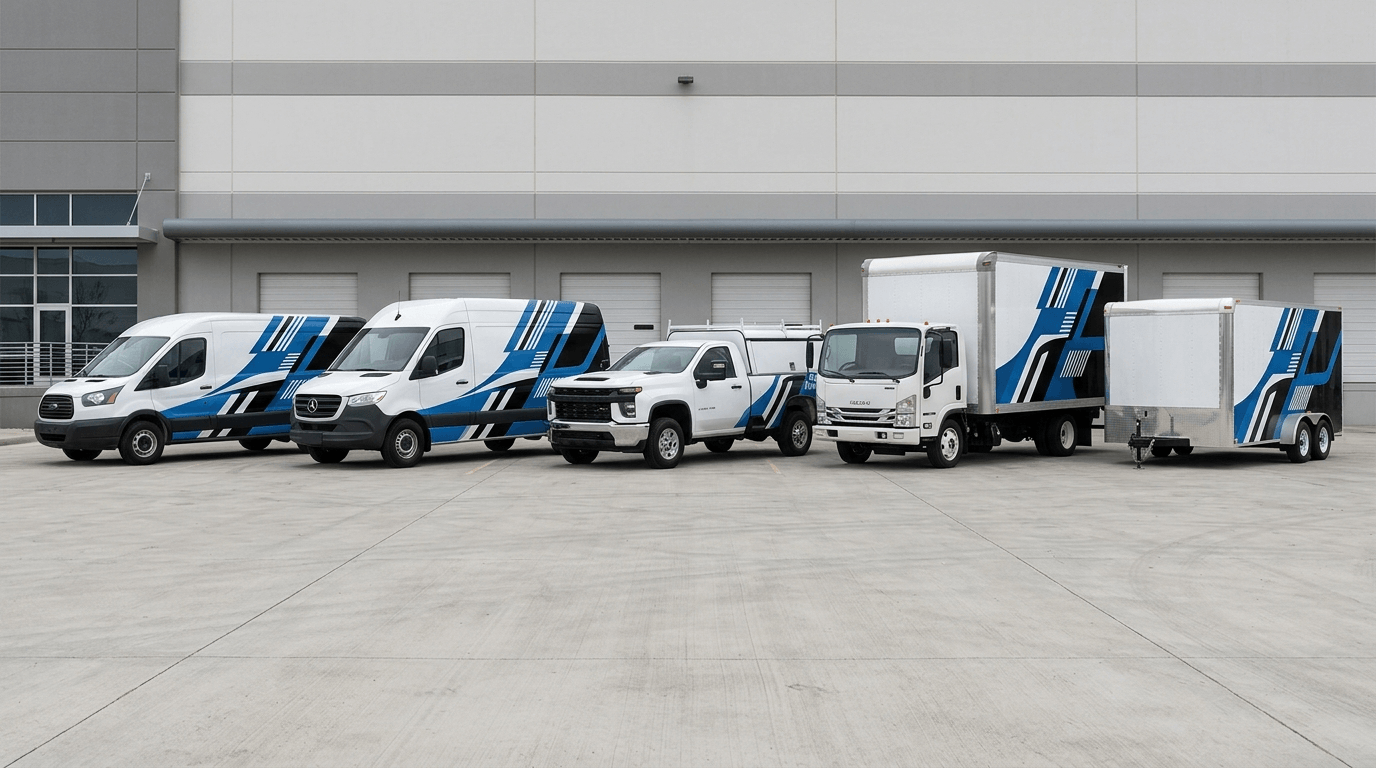
Select Vehicles That Represent the Larger Fleet
The first vehicles should help the team make decisions that apply to the vehicles following them.
If 18 of 25 fleet vehicles are Ford Transit high-roof vans, the first batch should probably include at least one of those vans. Beginning with a specialty pickup used by one manager would provide less useful information.
Representative vehicles help confirm:
- Template accuracy
- Logo placement
- Text size
- Image scaling
- Printed color
- Door alignment
- Coverage around body features
- Installation time
- Material behavior
- Final appearance
Choose common configurations rather than rare exceptions whenever possible.
An exception may still need a custom design later, but it should not necessarily control the first phase.
Prioritize the Vehicles Customers See Most
The first batch can also be used to create immediate visibility.
Customer-facing vehicles usually provide more branding value than vehicles used only inside warehouses, yards, or private properties.
Higher-visibility candidates may include:
- Service vans traveling through local neighborhoods
- Delivery trucks operating on recurring routes
- Vehicles used for estimates and sales appointments
- Trucks parked at active job sites
- Vehicles attending events
- Units assigned to dense service areas
- Box trucks with large, unobstructed sides
- Vehicles that remain parked in visible locations
Wrapping highly visible units first gives the new graphics an active role while the remainder of the fleet is still being planned.
However, visibility should not override vehicle condition or remaining service life. A heavily damaged truck scheduled for replacement may not be the right first investment, even if it travels a prominent route.
Use New Vehicles Before They Enter Service
Newly purchased vehicles are often strong candidates for the first group because they can be wrapped before being assigned to regular routes.
This offers several advantages:
- The vehicle has not yet become operationally essential
- The surface is usually easier to inspect
- There may be no old graphics to remove
- Equipment installation can be coordinated
- The vehicle begins service with the correct branding
- The wrap can remain in place for a larger portion of the vehicle’s working life
New does not automatically mean ready for wrapping. The vehicle should still be checked for transportation coatings, wax, dealership detailing products, paint repairs, or aftermarket equipment.
If racks, toolboxes, partitions, lighting, liftgates, or other accessories are being installed, their relationship to the graphics should be reviewed before final production.
Consider the Remaining Life of Each Vehicle
A fleet may contain vehicles that are only months away from sale, lease return, or replacement.
A complete wrap may not be the best choice for every aging unit. The business could prioritize newer vehicles for full graphics and use simpler lettering, decals, or partial branding on vehicles with limited remaining life.
Ask:
- How long will the vehicle remain active?
- Is it owned or leased?
- When is its expected replacement date?
- Will graphics need to be removed before sale or return?
- Does its current condition support wrapping?
- Is the vehicle important enough to justify temporary branding?
- Will a replacement vehicle arrive during the rollout?
This prevents the first-phase budget from being used on vehicles that will soon leave the fleet.
Do Not Choose the First Batch by Vehicle Number Alone
Unit numbers are helpful for tracking, but they are not a rollout strategy.
Wrapping units 1 through 5 simply because they appear first on a spreadsheet may produce a group with different body styles, operating locations, and surface conditions. It may also remove several essential vehicles from service simultaneously.
The first batch should be selected using practical criteria:
| Selection Factor | Strong First-Batch Candidate | Weak First-Batch Candidate |
| Vehicle type | Common fleet configuration | Rare specialty configuration |
| Condition | Sound paint and body | Rust, peeling paint, or unrepaired damage |
| Availability | Backup or flexible unit | Essential daily route vehicle |
| Visibility | Frequent customer exposure | Limited public use |
| Remaining life | Several years of service expected | Scheduled for replacement |
| Existing graphics | No graphics or manageable removal | Old, cracked, layered graphics |
| Location | Accessible to installation facility | Difficult to release or transport |
| Design value | Tests a major artwork family | Provides little guidance for other vehicles |
A selection matrix makes the decision easier to explain and keeps operational pressure from becoming the only factor.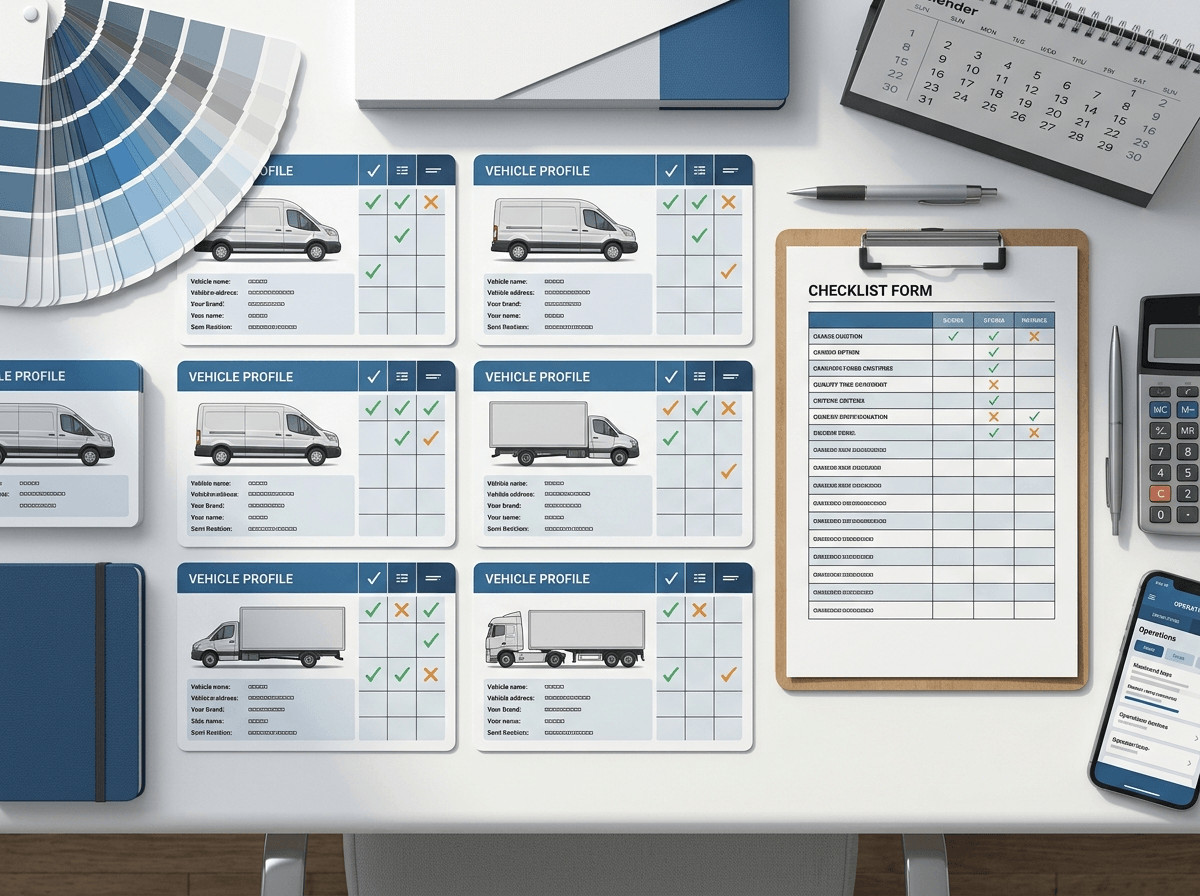
Protect Daily Operations
The first batch should not remove every backup or high-capacity vehicle at the same time.
Before confirming the group, fleet managers should review:
- Daily route requirements
- Driver assignments
- Seasonal demand
- Service appointments
- Delivery commitments
- Available reserve units
- Maintenance schedule
- Vehicle capacity
- Installation drop-off and pickup times
- Distance from the operating yard
If the company can release two vehicles without affecting service, the first installation batch should not contain five simply because five graphics kits are ready.
The graphics can be produced before the vehicles arrive. Once the design, dimensions, condition, and configuration have been verified, the vehicles should continue working during printing, lamination, cutting, and production preparation.
3M identifies installation efficiency and reduced vehicle downtime as important considerations when selecting and managing fleet graphic films. Its fleet guidance also recommends evaluating durability, maintenance, removal, and warranty—not only initial appearance. 3M’s five fleet-wrap film factors
Align the First Batch With the Available Budget
Some businesses begin with a smaller number because they are not ready to fund a complete fleet conversion.
That can still produce a professional result if the initial work is part of a larger approved system.
The first-phase budget should account for:
- Design and vehicle adaptation
- Printed wrap film
- Laminate
- Installation
- Existing vinyl removal
- Surface preparation
- Body repairs
- Travel or vehicle transport
- Lost operational time
- Replacement graphics
- Contingency for unexpected conditions
The lowest-cost vehicles should not automatically be wrapped first. They should be evaluated according to exposure, remaining service life, and how well they represent the future fleet.
When budget is limited, one approach is to combine coverage levels:
- Full wraps for flagship or high-visibility vehicles
- Partial wraps for secondary service vehicles
- Lettering for temporary or older units
- Replacement graphics as new vehicles enter service
The brand system should remain connected across all coverage levels.
Match the Batch to Production and Installation Capacity
A wrap company should explain how many graphics can be produced and installed without sacrificing control.
Printing a large fleet at once can create storage, labeling, revision, and material-management problems if the vehicles will not be available for weeks. On the other hand, producing one kit at a time may be inefficient for identical vehicles.
A reasonable batch should consider:
- Number of approved layouts
- Number of identical vehicles
- Print and lamination capacity
- Installation bay availability
- Installer availability
- Vehicle size
- Full or partial coverage
- Existing graphic removal
- Required completion date
- Storage of completed graphic kits
At Pixel Wraps, we coordinate design, printing, lamination, and installation through our in-house operation. This allows us to organize production around the approved vehicle groups instead of separating the graphics schedule from the installation schedule.
Review the Pilot Before Releasing the Next Batch
The next set of graphics should not enter complete production until the pilot has been reviewed.
The review should include representatives from the teams that approved the project, but feedback should be consolidated through one decision-maker.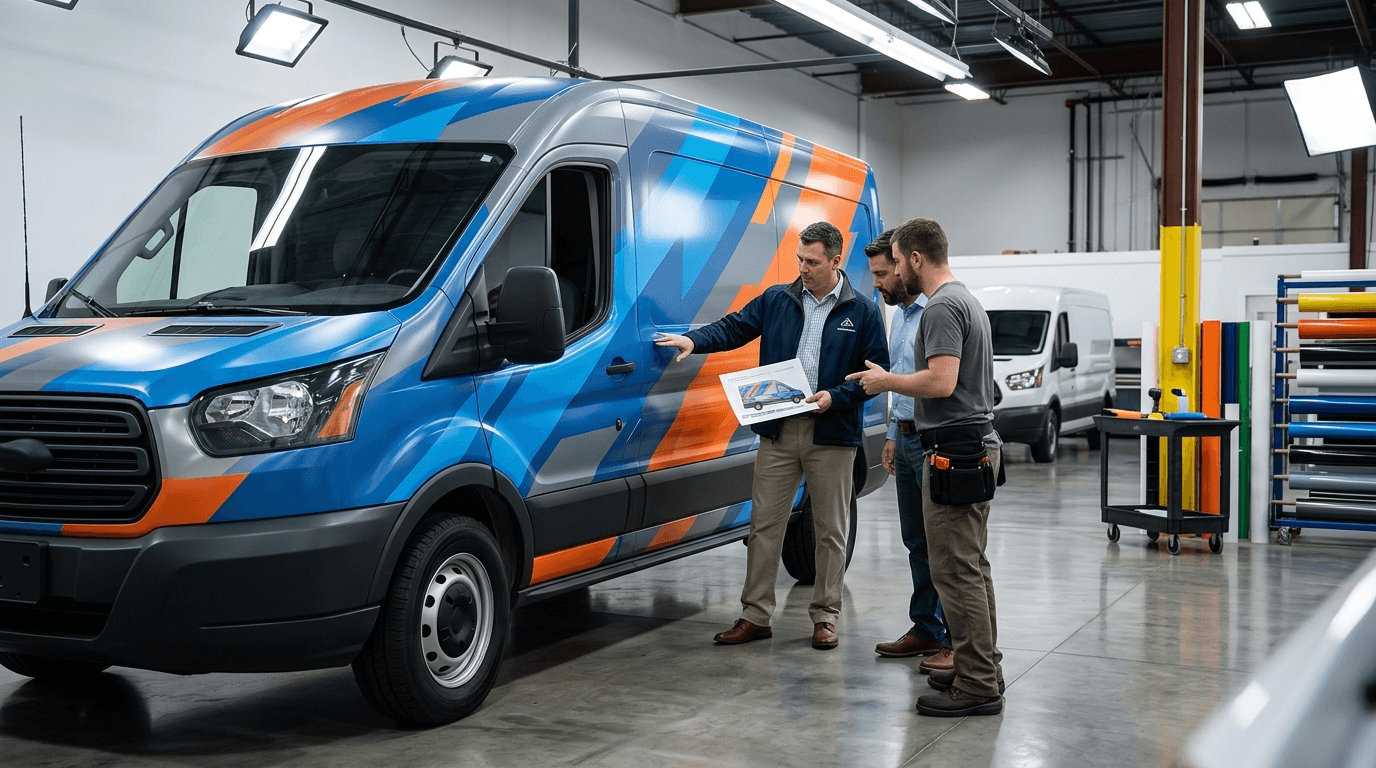
Evaluate:
- Does the logo appear large enough?
- Is the main service immediately clear?
- Can the phone number or website be read?
- Are the colors acceptable in daylight?
- Does the design work with the vehicle color?
- Are door seams handled correctly?
- Is important information blocked when doors open?
- Are rear graphics clear in traffic?
- Is required information present?
- Did installation uncover surface or equipment issues?
- Does the finished vehicle match the approved brand direction?
Any correction should be added to the master artwork before the next batch is printed.
Do not allow the pilot and later vehicles to carry different versions unless the change is documented and intentionally accepted.
Increase the Batch Size After the System Is Proven
The first batch does not have to determine the size of every later batch.
Once the design, material, production, and installation process have been confirmed, later groups can often become larger. The business and wrap company now know:
- Which layouts are correct
- How much time each vehicle requires
- How drivers handle drop-off and pickup
- Which surface issues are common
- How existing graphics affect removal
- How many vehicles operations can release
- How production kits should be labeled
- Who approves completed work
A rollout might progress like this:
- One pilot vehicle
- Three representative vehicles
- Five matching vehicles
- Repeated batches based on operational availability
- Specialty and exception vehicles
- Newly acquired or delayed units
The sequence can expand without exposing the entire project to an untested process.
When Wrapping the Entire Fleet at Once Makes Sense
A phased start is not required in every situation.
A complete or accelerated rollout may be suitable when:
- The fleet is small
- All vehicles are identical
- The design has already been tested
- Enough replacement vehicles are available
- The old brand cannot remain visible
- A franchise conversion has a firm deadline
- The fleet is not yet in service
- Vehicles are stored at one location
- Graphics are limited to simple lettering
- Installation capacity has been confirmed
Even in these situations, one finished vehicle should be reviewed before every graphic kit is installed. A small issue repeated across ten vehicles becomes a larger and more expensive correction.
Recommended Starting Points by Fleet Situation
The following ranges are planning examples, not universal rules:
| Fleet Situation | Possible Starting Point | Main Purpose |
| Two to five similar vehicles | One vehicle or the full group | Confirm design or complete a small fleet |
| Six to fifteen similar vehicles | One pilot followed by two to five units | Test and then establish a repeatable batch |
| Mixed fleet under fifteen vehicles | One representative from each major category | Verify different artwork families |
| Fleet of fifteen to fifty vehicles | One to three pilots followed by controlled batches | Balance consistency with operations |
| Multi-location fleet | Pilot at the primary location, then location-based groups | Confirm standards before distribution |
| New fleet not yet in service | One pilot followed by accelerated completion | Brand vehicles before deployment |
| Active rebrand with a hard deadline | Representative pilot and larger scheduled phases | Reduce the period of mixed branding |
The correct number should be confirmed after the fleet inventory, design requirements, vehicle condition, and operational schedule are understood.
Start With the Vehicles That Teach You the Most
The best first batch is not necessarily the largest or easiest group. It is the group that provides the clearest information for the rest of the project.
A strong first batch should help answer:
- Does the design work at full size?
- Are the colors correct?
- Do the layouts fit the main vehicle categories?
- How long does removal and installation take?
- Can the business release vehicles without disrupting service?
- Are the selected materials appropriate?
- What should change before broader production?
- How should future batches be organized?
Once those questions are answered, the remaining fleet can move forward with less uncertainty.
Plan Your First Fleet-Wrap Batch With Pixel Wraps
Pixel Wraps helps commercial businesses determine where a fleet graphics program should begin.
We review the vehicle list, identify representative units, examine existing graphics and surface conditions, develop vehicle-specific layouts, and create a production plan for the first and subsequent groups.
Our in-house services include:
- Fleet vehicle review
- Wrap design
- Full and partial wraps
- Vehicle lettering
- Existing graphic removal
- Material selection
- Printing and lamination
- Climate-controlled installation
- Pilot vehicle production
- Batch scheduling
- Completion records
- Future vehicle additions
We work with businesses throughout New York City, New Jersey, Pennsylvania, and the tri-state area. Send our team your vehicle list, photographs, operating schedule, and desired coverage. We will help identify the vehicles that should enter the first batch and build a practical path for completing the rest.