A professionally produced commercial vehicle wrap can remain in service for several years, but there is no single lifespan that applies to every material, vehicle, panel, or operating environment.
The answer depends on the complete wrap system:
- Printable film
- Ink
- Overlaminate
- Vehicle surface
- Production
- Installation
- Exposure
- Cleaning
- Maintenance
- Removal timing
The roof of a van may age faster than its vertical doors. A vehicle parked indoors can age differently from an identical van parked outside. A temporary promotional film also has a different service expectation from a premium cast fleet-wrap system.
At Pixel Wraps, we recommend planning a fleet’s inspection and replacement cycle around the exact material specification and real operating conditions—not a general promise that every wrap lasts a fixed number of years.
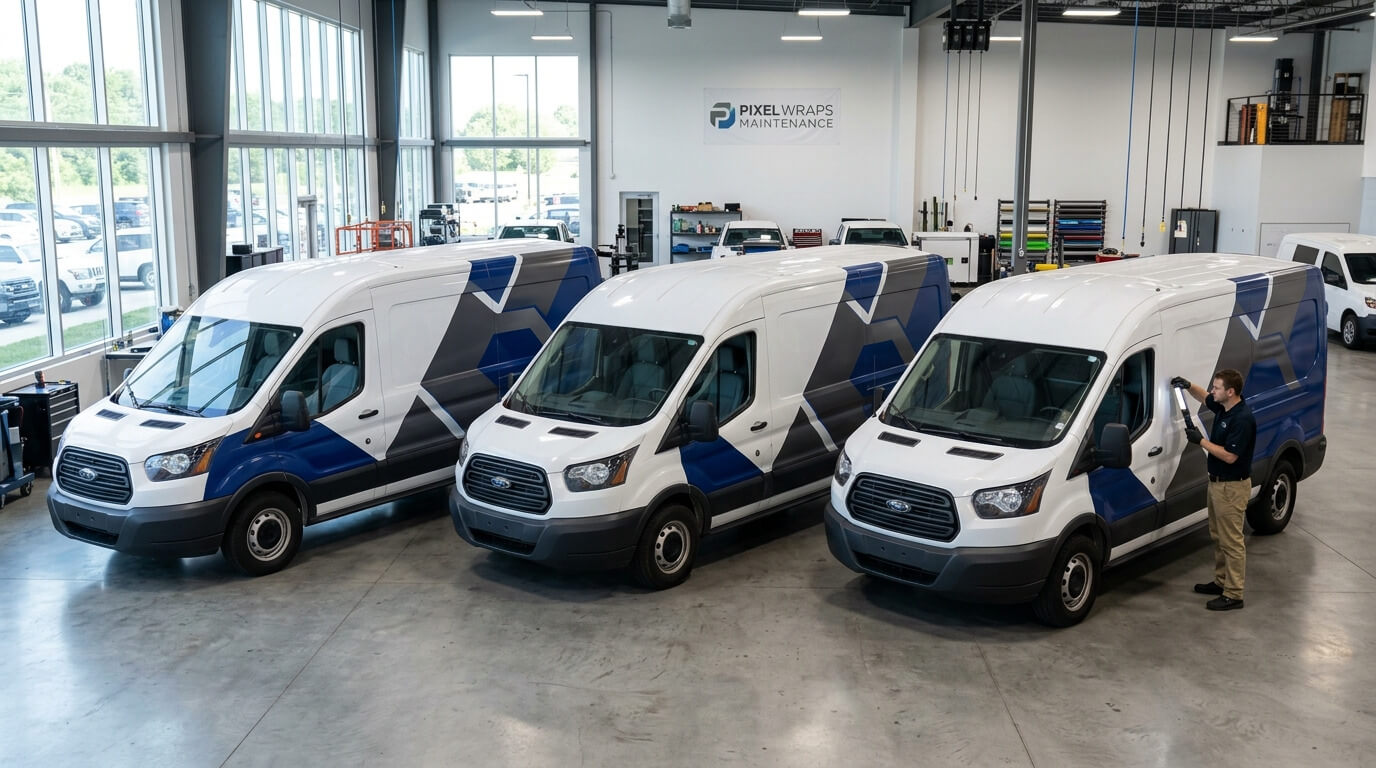
The Short Answer: Plan for a Multiyear Service Period, Then Verify the Exact System
Premium commercial vehicle-wrap systems are designed for multiyear outdoor use when they are:
- Correctly specified
- Printed and laminated properly
- Installed on a suitable surface
- Maintained according to the manufacturer’s instructions
- Removed within the applicable service and removability conditions
However, “multiyear” is not an exact promise.
A business should request the current documents for the proposed:
- Print film
- Laminate
- Ink and printer combination
- Exposure category
- Vehicle surface
- Warranty program
Some fleet owners replace graphics before the material reaches its maximum technical service period because the company rebrands, updates contact information, sells the vehicle, or wants a consistently fresh appearance.
The practical fleet-refresh date may therefore arrive before the film’s maximum published durability.
Published Durability Is Not Guaranteed Wrap Life
A product bulletin may list a maximum durability or expected performance period.
That figure is normally based on defined conditions, which can include:
- Unprinted film
- Flat surface
- Vertical orientation
- Outdoor exposure
- A particular climate zone
- Specialist application
- Proper maintenance
Those conditions may not describe the finished commercial wrap.
For example, ORAFOL’s vehicle-wrapping product information explains that published durability can represent a maximum service period under specified vertical outdoor exposure and proper care. It also notes that durability figures for printable materials may refer to unprinted film.
See the ORAFOL Vehicle Wrapping Product Guide.
Ink, laminate, orientation, vehicle geometry, and exposure can change the completed graphic’s applicable performance period.
Warranty Period Is Not the Same as Lifespan
A manufacturer warranty defines coverage under written conditions. It does not necessarily state when a wrap must be removed or when a fleet owner will decide it no longer looks acceptable.
Warranty coverage may depend on:
- Exact film
- Approved laminate
- Qualified ink and printer
- Application type
- Geographic zone
- Vertical or horizontal exposure
- Surface
- Installation
- Maintenance
- Documentation
A wrap may remain usable after warranty coverage ends. Conversely, accidental damage can require replacement during the warranty period without qualifying as a manufacturer defect.
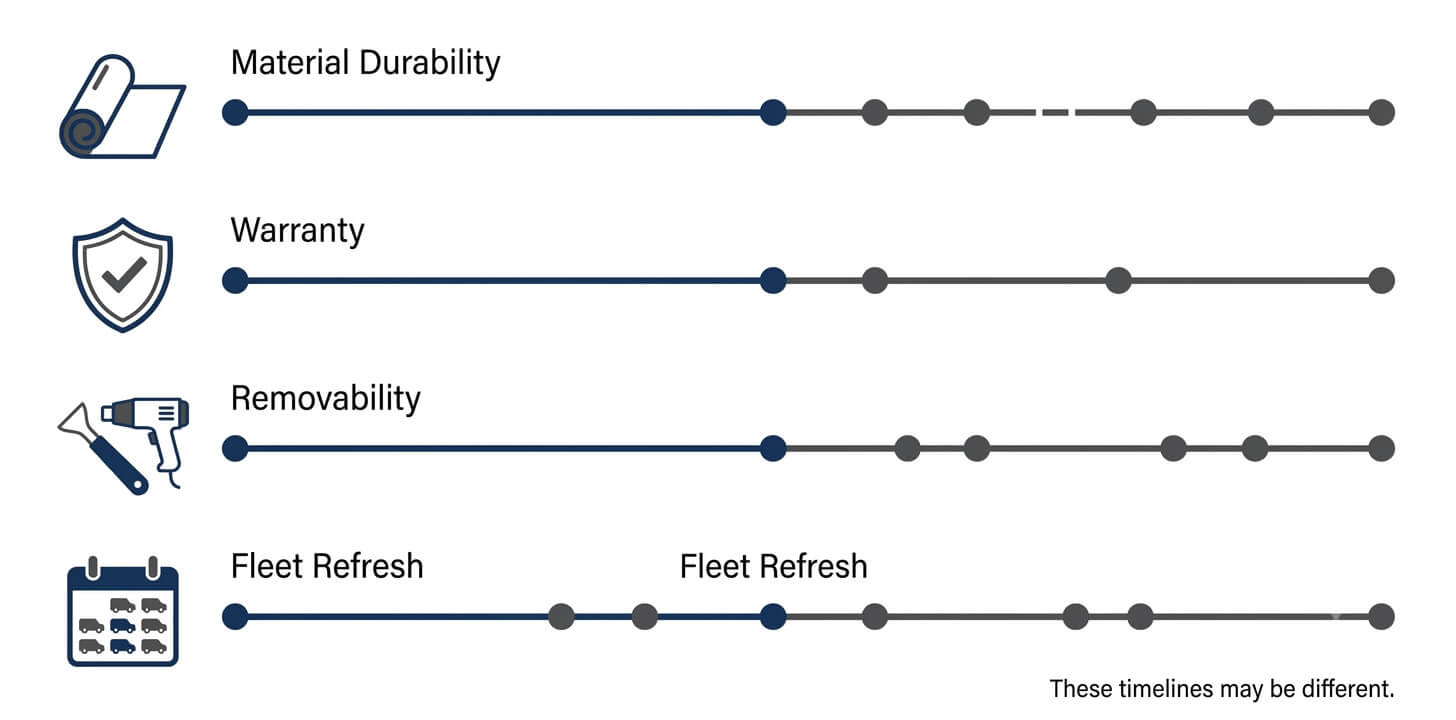
Fleet owners should separate four different timelines:
- Published material durability
- Finished-graphic warranty period
- Adhesive removability period
- Company appearance or replacement cycle
Vertical, Horizontal, and Nonvertical Exposure
Panel orientation has a major effect on vehicle-wrap aging.
Vertical Surfaces
Vertical doors and body sides generally receive less direct overhead sunlight than roofs and hoods. Manufacturer durability and warranty documents frequently use vertical exposure as their baseline.
Horizontal Surfaces
Roofs, hoods, and upward-facing sections receive more direct:
- Ultraviolet exposure
- Heat
- Rain
- Snow
- Ice
- Pollution
- Bird residue
- Tree sap
These areas can age faster and may receive shorter warranty coverage.
Nonvertical Surfaces
Sloped body sections fall between fully vertical and fully horizontal. Manufacturers may classify these areas separately.
3M’s Wrap Film Series 2080 page, for example, identifies different maximum warranty periods for vertical and horizontal exposure. This is a solid-color film rather than a universal printed fleet-wrap specification, but it illustrates why orientation must be considered.
See the 3M Wrap Film Series 2080 product page.
For a printed commercial wrap, the exact print-film and laminate warranty matrix should be reviewed.
Material Selection Changes the Expected Service Period
Commercial vehicle graphics can use materials intended for:
- Short-term promotions
- Medium-term campaigns
- Long-term fleet branding
- Flat surfaces
- Simple curves
- Complex full wraps
- Difficult surfaces
- Reflective applications
- Window graphics
A temporary transit film should not be expected to perform like a premium cast full-wrap system.
Likewise, a premium long-term film may be unnecessary for a six-month campaign on a flat panel.
3M’s current fleet information identifies changeable graphic films with expected performance of up to two years, although they may be used for shorter campaigns.
See 3M Changeable Graphic Films.
That category is different from longer-term fleet-wrap materials.
Pixel Wraps begins by asking how long the graphics are actually expected to remain in service. The answer affects the film, adhesive, laminate, panel coverage, and removal plan.
The Laminate Helps Protect the Print
For most long-term printed vehicle graphics, a compatible overlaminate protects the ink from routine:
- UV exposure
- Moisture
- Abrasion
- Washing
- Road contamination
- Hand contact
The laminate also establishes the finish and affects conformability.
An unsuitable laminate can work against the print film. Skipping laminate on a long-term printed wrap can expose the ink to unnecessary abrasion and environmental wear.
The face film, ink, and overlaminate should be selected as one system.
A laminate cannot make the wrap immune to scratches, collisions, pressure-washer damage, or strong chemicals.
Print Quality Affects Longevity
Premium vinyl cannot correct an unstable print.
Wrap performance can be affected by:
- Excessive ink
- Incorrect media profile
- Incomplete drying
- Incomplete curing
- Incompatible ink
- Laminating too early
- Poor laminate bond
- Contamination during production
A printed graphic may initially look good while retained solvent, excessive ink, or processing problems contribute to later shrinkage, curling, or adhesion issues.
The manufacturer’s print-film bulletin should establish ink limits and processing requirements.
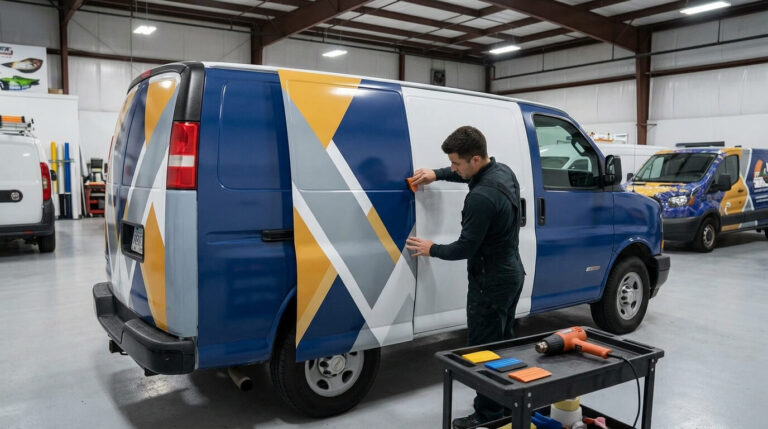
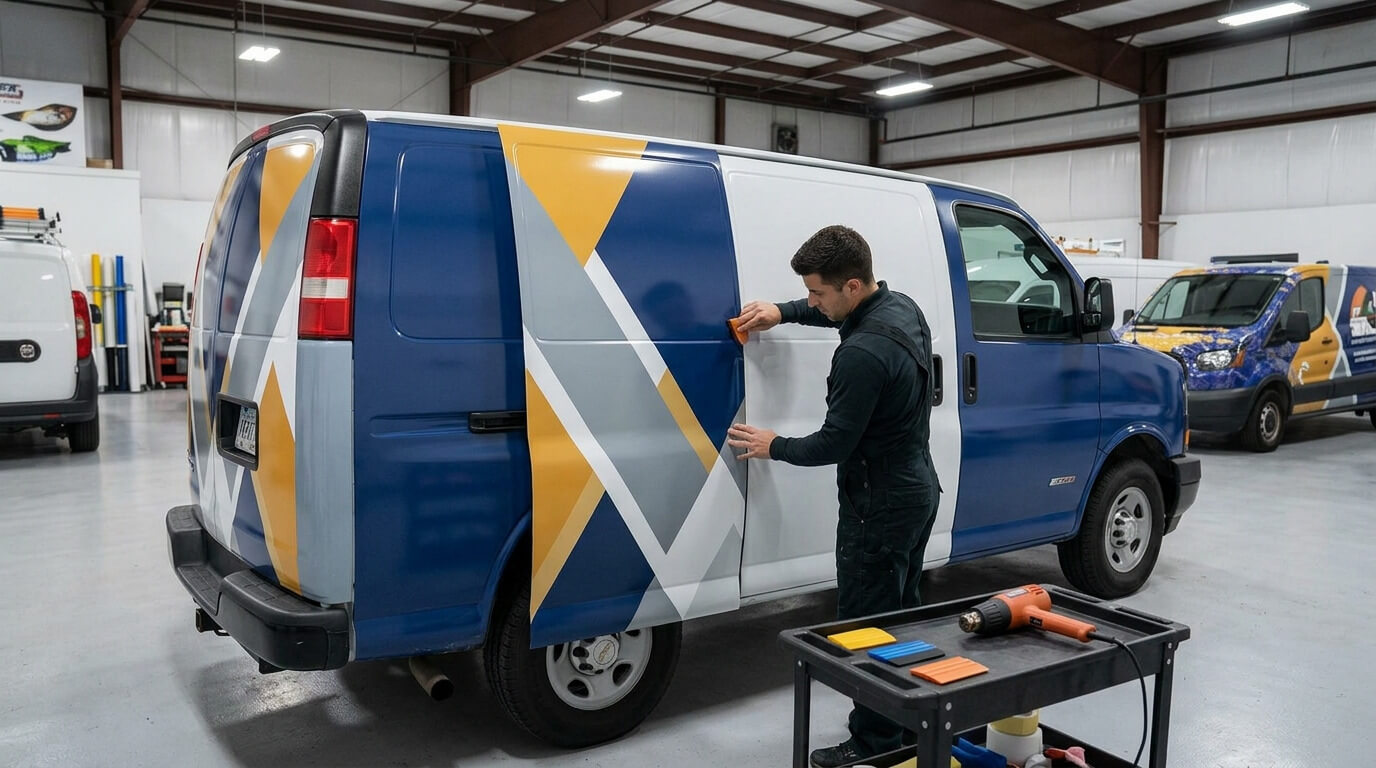
Installation Quality Affects Lifespan
The material must be applied within its limits.
Installation factors include:
- Vehicle inspection
- Surface cleaning
- Complete drying
- Application temperature
- Panel placement
- Squeegee pressure
- Stretch
- Heat use
- Post-heating
- Seam direction
- Edge finishing
- Indoor bond-development time
Poor preparation can shorten the wrap’s useful life even when the material is appropriate.
Common early failures include:
- Edge lifting
- Channel lifting
- Contaminated seams
- Wrinkles
- Open overlaps
- Film pulling away from moving body gaps
Professional installation does not prevent accidental damage or failing paint, but it reduces avoidable production and application problems.
Vehicle Condition Matters
A wrap is only as stable as the surface underneath it.
Potential problems include:
- Failing clear coat
- Repainted panels
- Rust
- Corrosion
- Body filler
- Uncured paint
- Existing adhesive
- Chips and scratches
- Poor collision repair
Vinyl may remain bonded to weak paint while the paint separates from the vehicle.
Surface condition also affects removal. A film designed for professional removal cannot guarantee safe results from unstable or poorly repaired paint.
Pixel Wraps inspects and documents visible vehicle condition before installation whenever practical.
Operating Environment Changes Real-World Life
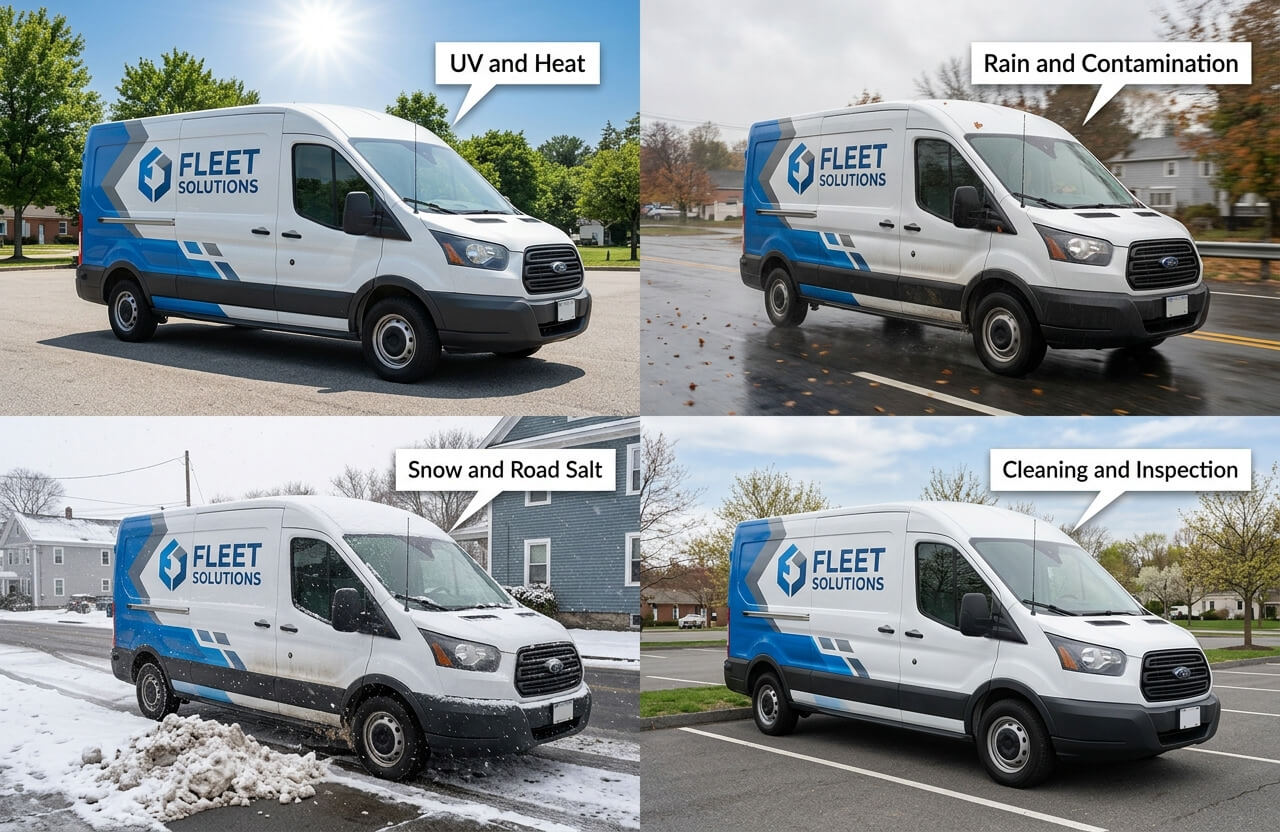
A fleet operating across New Jersey, New York, and Pennsylvania experiences:
- Summer heat
- Winter freezing
- Snow
- Road salt
- Rain
- Direct sunlight
- Tree residue
- Urban pollution
- Industrial contamination
- Frequent temperature changes
The same wrap may age differently on two fleet vehicles if one:
- Parks indoors
- Drives fewer miles
- Operates mainly at night
- Travels on cleaner roads
- Receives regular hand washing
While the other:
- Parks outside
- Drives highways daily
- Operates near construction sites
- Receives direct sun
- Is cleaned with aggressive equipment
Vehicle mileage alone does not determine wrap life, but it can indicate greater exposure to road contamination and physical wear.
Parking Conditions Matter
A vehicle parked inside overnight is protected from many hours of:
- UV exposure
- Rain
- Snow
- Ice
- Tree sap
- Bird residue
- Temperature extremes
Indoor parking can support longer appearance life, but it does not cancel daytime exposure or maintenance needs.
Outdoor parking does not mean a wrap will fail quickly. It means the replacement plan should account for higher exposure.
Fleet records should identify which vehicles are:
- Garaged
- Parked under cover
- Parked in open lots
- Parked beneath trees
- Regularly exposed to industrial contamination
This information helps explain why some units age faster than others.
Wrap Color Influences Visible Aging
Dark colors absorb more heat than many lighter colors. Very bright colors, deep reds, and heavily saturated printed areas can also show fading differently.
The complete result depends on:
- Pigment or ink
- Laminate
- Film
- Panel orientation
- Heat
- UV exposure
- Cleaning
A design with large uniform color areas may make small changes more noticeable than a textured or photographic background.
Color selection should support the brand first, but the fleet owner should understand how the design may show dirt, scratches, and aging.
Washing Can Extend or Shorten Appearance Life
Regular, suitable cleaning removes contaminants that can stain or abrade the wrap.
Good practices include:
- Hand washing when possible
- Mild wrap-compatible soap
- Soft clean cloths or sponges
- Rinsing loose grit before wiping
- Cleaning fuel spills promptly
- Drying to reduce hard-water spots
- Inspecting edges during washing
Damaging practices include:
- Abrasive brushes
- Harsh solvents
- Scraping with sharp tools
- High-pressure spray directed at edges
- Allowing contaminants to remain for long periods
- Aggressive automatic brush washing
ORAFOL places responsibility for routine vehicle-wrap maintenance and care with the vehicle owner and provides product-specific guidance for maintaining wrapped surfaces.
See the ORAFOL Vehicle Wrap Processing and Handling Guide.
Drivers and fleet-washing teams should receive the same care instructions.
Physical Damage Is Different From Material Aging
A wrap can be in good overall condition and still need one damaged section replaced.
Common fleet damage includes:
- Door scrapes
- Loading damage
- Ladder contact
- Minor collision repair
- Branch scratches
- Fuel-door staining
- Rock impacts
- Damaged bumper graphics
- Cuts around service compartments
A repair may extend the useful life of the remaining wrap when:
- The surrounding graphics remain presentable
- The original material is identifiable
- Color matching is acceptable
- Damage is limited to a logical panel
- The vehicle surface is stable
If multiple sections are damaged or heavily faded, a complete rewrap may provide better value.
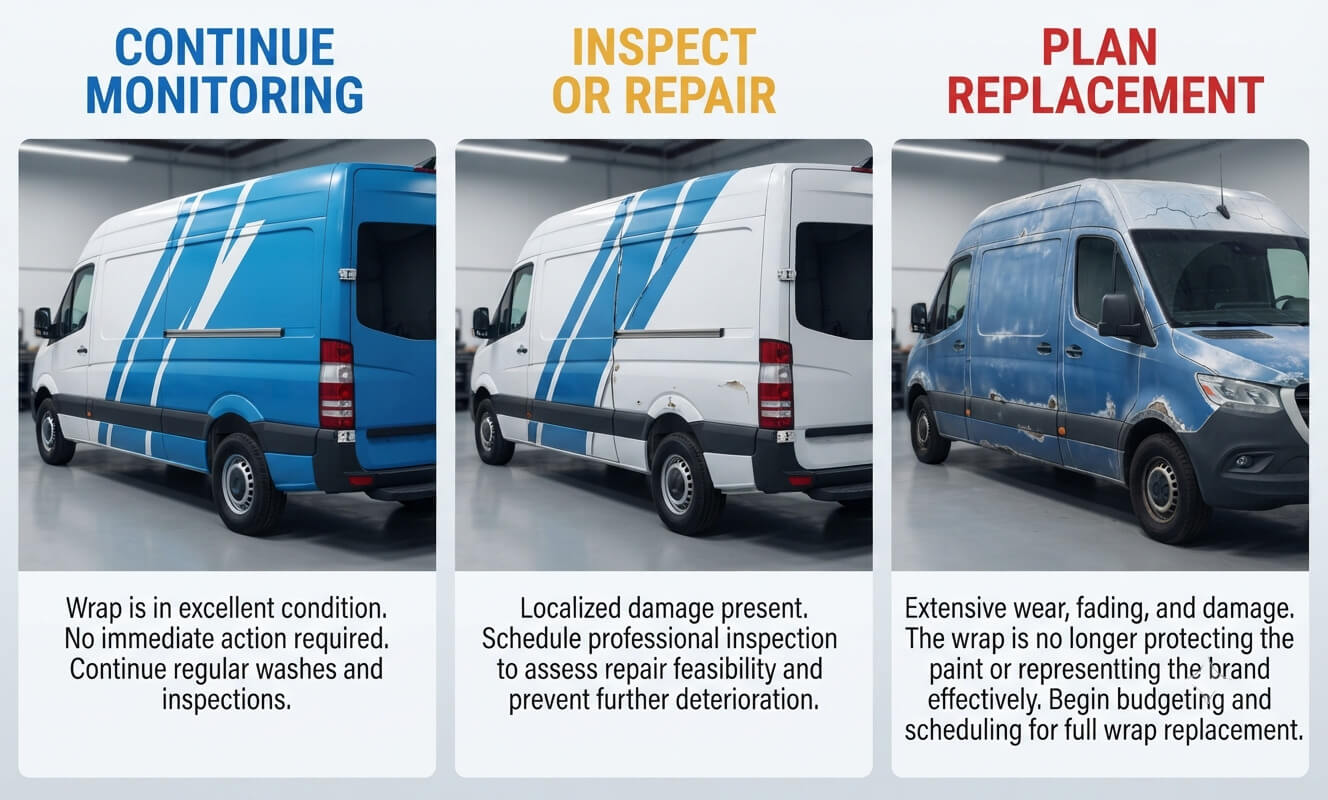
Signs That a Commercial Wrap Needs Replacement
A wrap should be evaluated when you notice:
- Persistent edge lifting
- Channel lifting
- Cracking
- Significant fading
- Chalking
- Laminate separation
- Shrinkage
- Widespread scratches
- Embedded contamination
- Adhesive movement
- Large collision repairs
- Outdated phone numbers or services
- Inconsistent graphics across the fleet
- Material approaching its planned removal period
Do not wait for the wrap to become brittle, severely cracked, or difficult to remove.
A wrap can be technically attached to the vehicle while no longer meeting the company’s branding standard.
Why Removal Timing Matters
A wrap should not remain on the vehicle indefinitely.
As film and adhesive age through heat and UV exposure, removal can become:
- Slower
- More brittle
- More labor-intensive
- More likely to leave residue
- More difficult on horizontal surfaces
The applicable removability period may be shorter than the material’s maximum outdoor durability.
For example, a product can have one published durability period and a different documented clean-removal period. The conditions and possible adhesive transfer must be reviewed in the technical data.
Removing a wrap within the planned service window can reduce downtime and removal labor compared with waiting until the material is severely aged.
A Practical Fleet Inspection Schedule
Fleet owners should not wait until drivers report large pieces lifting.
A practical program can include:
Routine Driver Checks
Drivers can report:
- Loose edges
- Scrapes
- Fuel spills
- Collision damage
- Lifting in channels
- Damaged window graphics
Scheduled Washing Inspections
The washing team can check:
- Lower panels
- Door edges
- Wheel arches
- Rear doors
- Fuel areas
- Roof edges
- Seams and overlaps
Periodic Management Review
Fleet management can review:
- Brand consistency
- Fading
- Repair history
- Vehicle replacement plans
- Wrap installation dates
- Material and laminate records
- Upcoming rebranding
- Removal timing
The exact frequency should reflect vehicle use and company maintenance operations.
Create a Wrap Record for Every Vehicle
A fleet-wrap record can include:
- Fleet number
- Vehicle identification
- Installation date
- Film
- Laminate
- Production provider
- Installer
- Known paint repairs
- Parking conditions
- Cleaning method
- Inspection dates
- Repair history
- Planned removal or refresh date
This record helps businesses compare vehicles installed at different times and identify patterns across the fleet.
It also supports manufacturer or workmanship evaluation if a potential failure occurs.
How to Estimate Your Fleet’s Replacement Cycle
Ask these questions:
| Question | Why it affects the cycle |
| Is the graphic temporary or long-term? | The selected product category sets the basic expectation |
| Is the wrap full or partial? | Coverage and panel orientation affect exposure |
| Are the roof and hood wrapped? | Horizontal surfaces can age faster |
| Where will vehicles operate? | Climate and road conditions affect wear |
| Where will they park? | Indoor storage reduces exposure |
| How will they be washed? | Aggressive methods can damage edges and finish |
| How consistent must the fleet look? | Brand standards may require earlier replacement |
| Will vehicles be sold or returned? | Removal must fit the asset schedule |
| Are new vehicles added regularly? | Older and newer graphics may look different |
| What does the exact product documentation say? | Durability, warranty, and removability are system-specific |
Pixel Wraps’ Approach to Wrap Lifespan
We help businesses plan around the required service period from the beginning.
Our process includes:
- Identifying the intended campaign or fleet timeline
- Inspecting the vehicle surface
- Selecting an appropriate film and laminate
- Reviewing product-specific technical information
- Printing and processing the graphics in-house
- Installing in a controlled environment
- Documenting the project
- Providing care instructions
- Evaluating damage and aging
- Planning repair, removal, or replacement
We do not treat the highest number on a product sheet as a blanket lifespan promise.
The practical goal is a wrap that remains presentable through the required business period and can be removed before excessive aging creates avoidable cost.
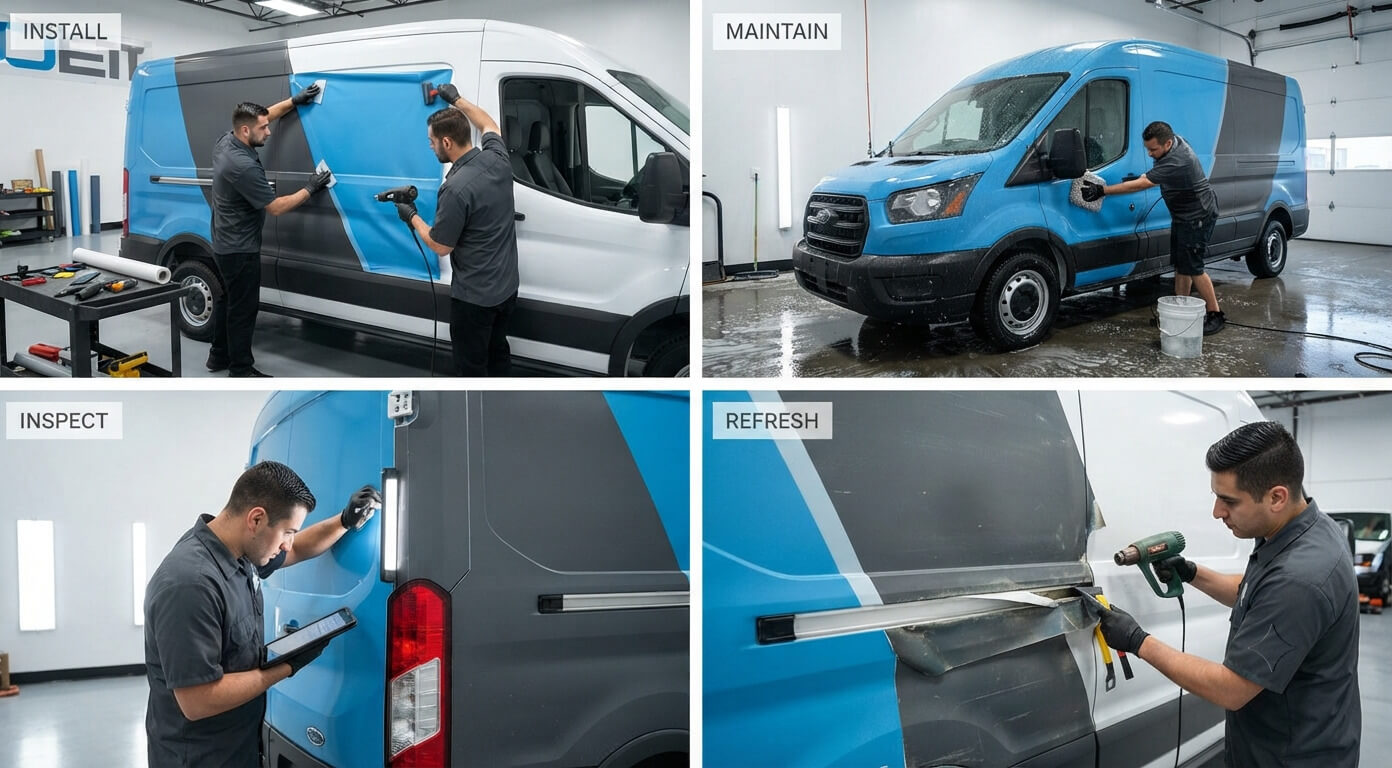
Replace the Wrap Based on Condition and Business Needs
The useful life of a commercial wrap is not determined by age alone.
A responsible decision considers:
- Material specification
- Warranty
- Removability
- Panel orientation
- Appearance
- Damage
- Brand accuracy
- Vehicle ownership plan
- Removal condition
- Repair cost
A well-maintained vertical fleet graphic may remain presentable longer than a heavily exposed hood produced at the same time.
The best strategy is to inspect the fleet, keep records, repair small damage early, and schedule replacement before the wrap becomes severely aged.
Plan Your Fleet-Wrap Cycle With Pixel Wraps
Pixel Wraps can review existing fleet graphics and help determine whether the vehicles should be:
- Continued in service
- Professionally cleaned
- Repaired
- Partially rewrapped
- Completely rewrapped
- Scheduled for removal
For new projects, we can recommend a material system based on the required service period, vehicle type, coverage, parking, and operating environment.
Contact Pixel Wraps to plan a commercial wrap installation, inspection, repair, or fleet refresh.